ScaleBirds

ScaleBirds, Home of the 63% Scale Hellcat replica kitplane project.

Winter Update

Hello and greetings! It has been pretty hard winter here in Connecticut. Colder for much longer and a good amount of snow this year. We have dealt with it and are still trucking along. It did make changes to some of our operations. Multiple snow days and alternate work weeks and some days and nights of just staying home and doing CAD design work. Most years we get 3 or 4 dustings to 4 inch snow falls, maybe using the blower once. Been seriously exercising the snow blower this year. I’m mentally done with this stuff. Starting to like the idea of maybe becoming a Snow Bird someday! A lot has transpired in our corner of the AeroVerse since the November 18th blog post. Here goes:

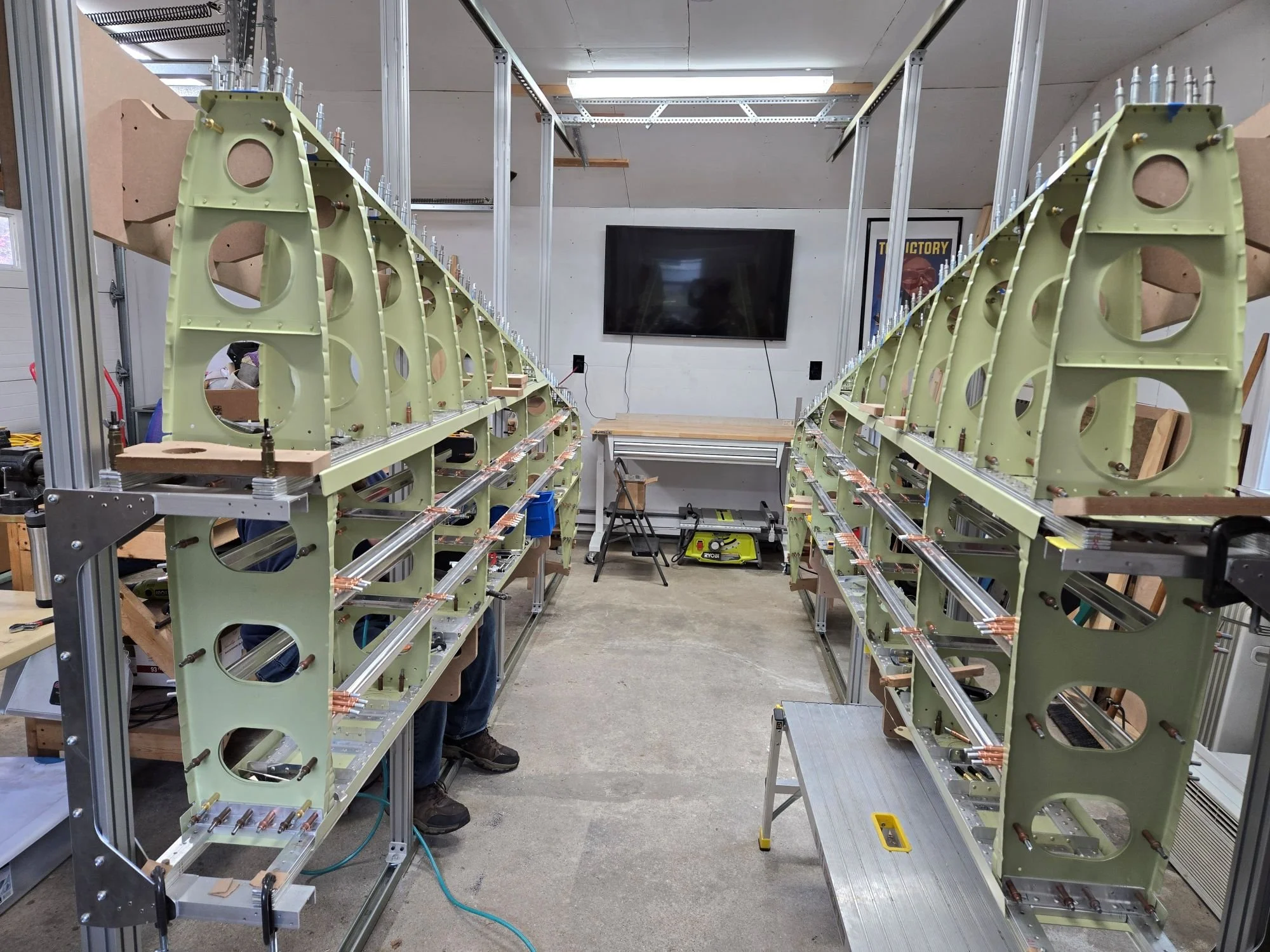
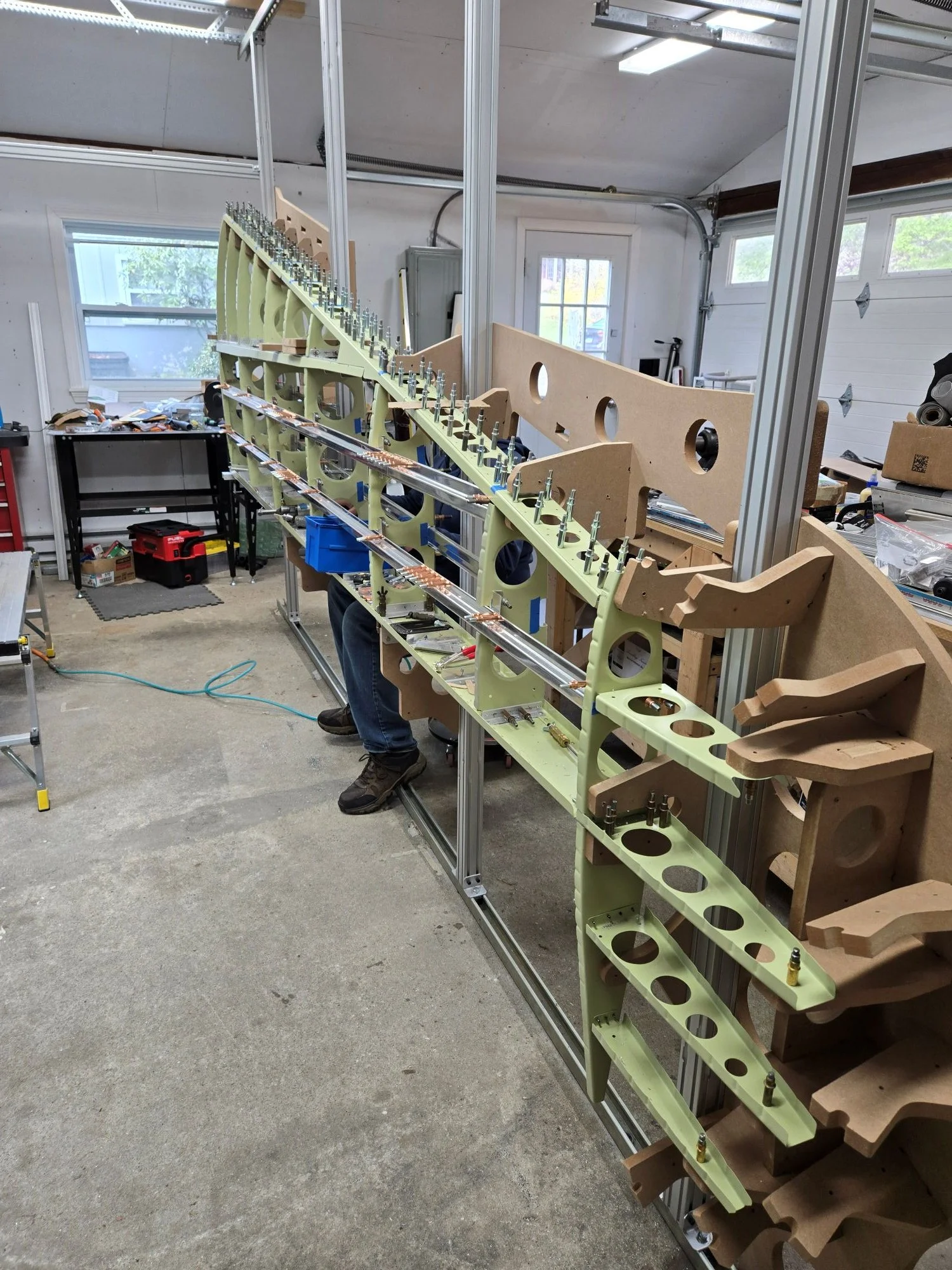
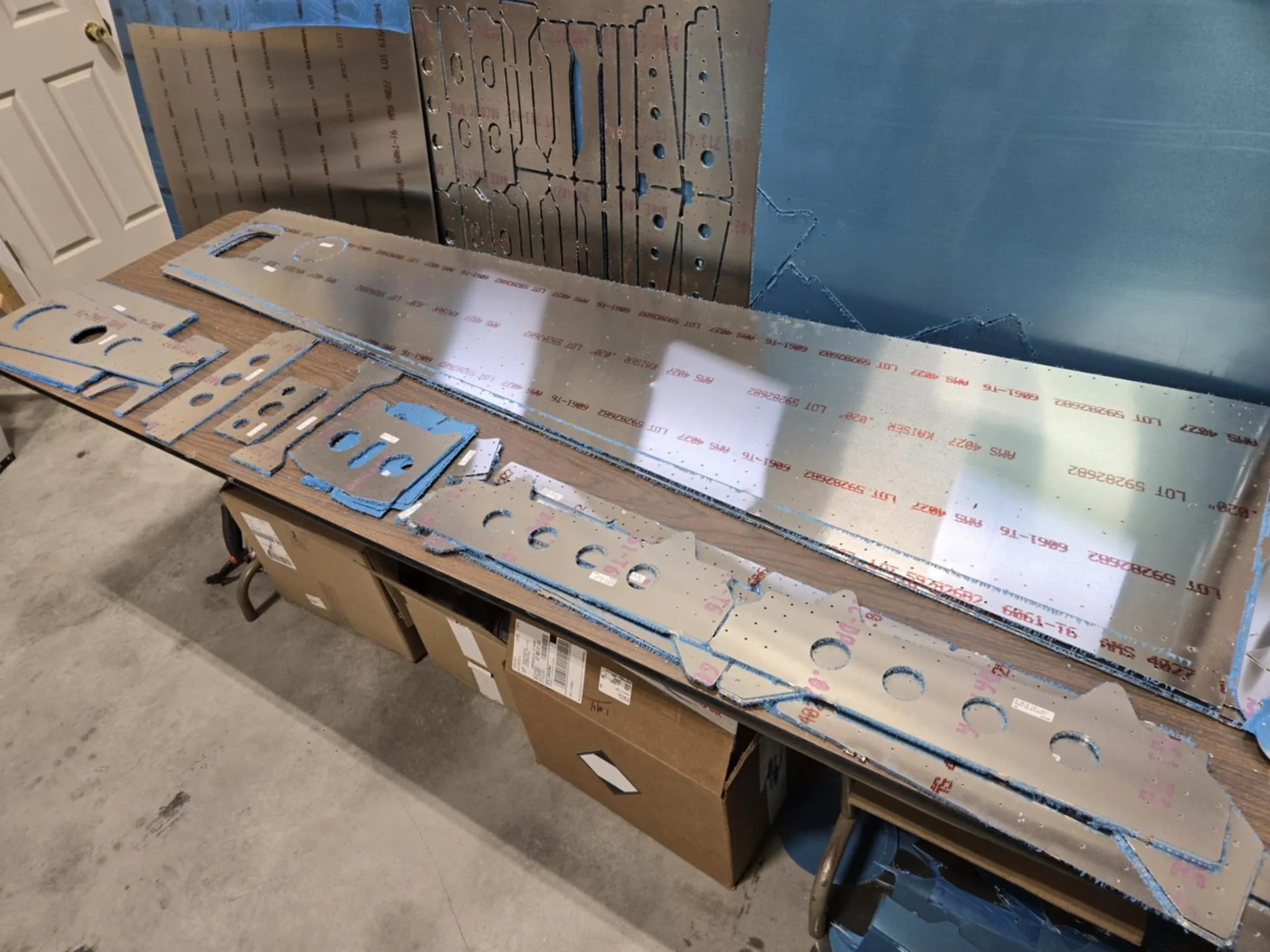
We have been pushing on the Bomber project tail feathers and are still at it. The elevators have been fabricated and pre-assembled, drilled, diss-assembled and out for primer. We will be able to rivet and get final assembly of the elevators fairly quickly when the parts come back from the painter. The cold temps are interfering with the painting schedule, but signs point to soon. The horizontal stabilizers are going into the build fixture this week. The 3D model design is almost ready for the vertical stabilizer and we should be making those parts shortly. The rudder will go pretty quickly and is similar to the elevators - but harder due to the curving leading edge and trailing edge towards the top.

Not sure why Boeing did the B-17 the hard way. Most airframe manufacturers make straight or mostly straight taper airframe parts with spars staying at the same cord percentage all the way out so they are straight. If you look at the B-17 carefully, it does have straight tapers to the wing and horizontal skins. But the spars do not follow the taper, they meet the skins at different percentage of cord all along the length of the spars. This change in percentage makes the spar caps and stringers have a curve/bow shape. It makes it much more complicated to fabricate if you care about panel lines, rivet lines, etc… We are trying to make an exact scale replica externally.

We are also working on getting started on the aft fuselage at the same time we work the vertical and rudder. The aft fuselage is pretty much a straight conical taper - except in the transition area near the ball turret and the fwd fuselage aft of the radio room. The fabrication and assembly seem to be straight forward and easier than flying surfaces. We may also get some experienced volunteers to help with fabrication. We are trying to push and pick up more momentum on this huge and amazing project. Meanwhile, our partner for the engine installation design, Radial Conversions from FL is helping us with modifications and testing of the engine with mechanical fuel injection and a new electric adjustable, featherable custom propeller.

The LiteFighter Beta kits are making progress. The overall design update program is close to finalized, our part numbering, assembly documentation and inventory processeses have been largely worked out, and so we will be able to push the forward fuselage and wing kits in more rapid succession.

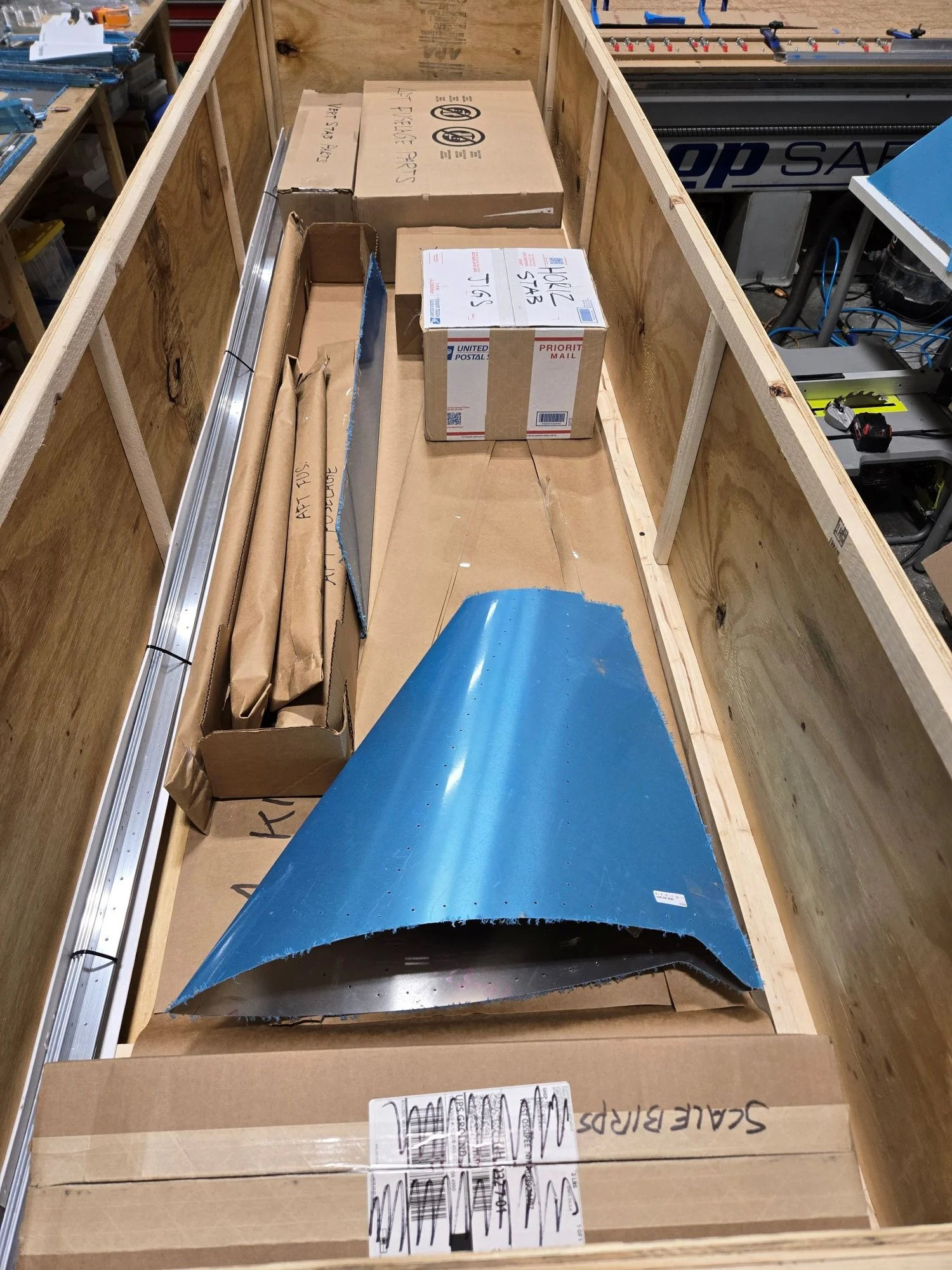
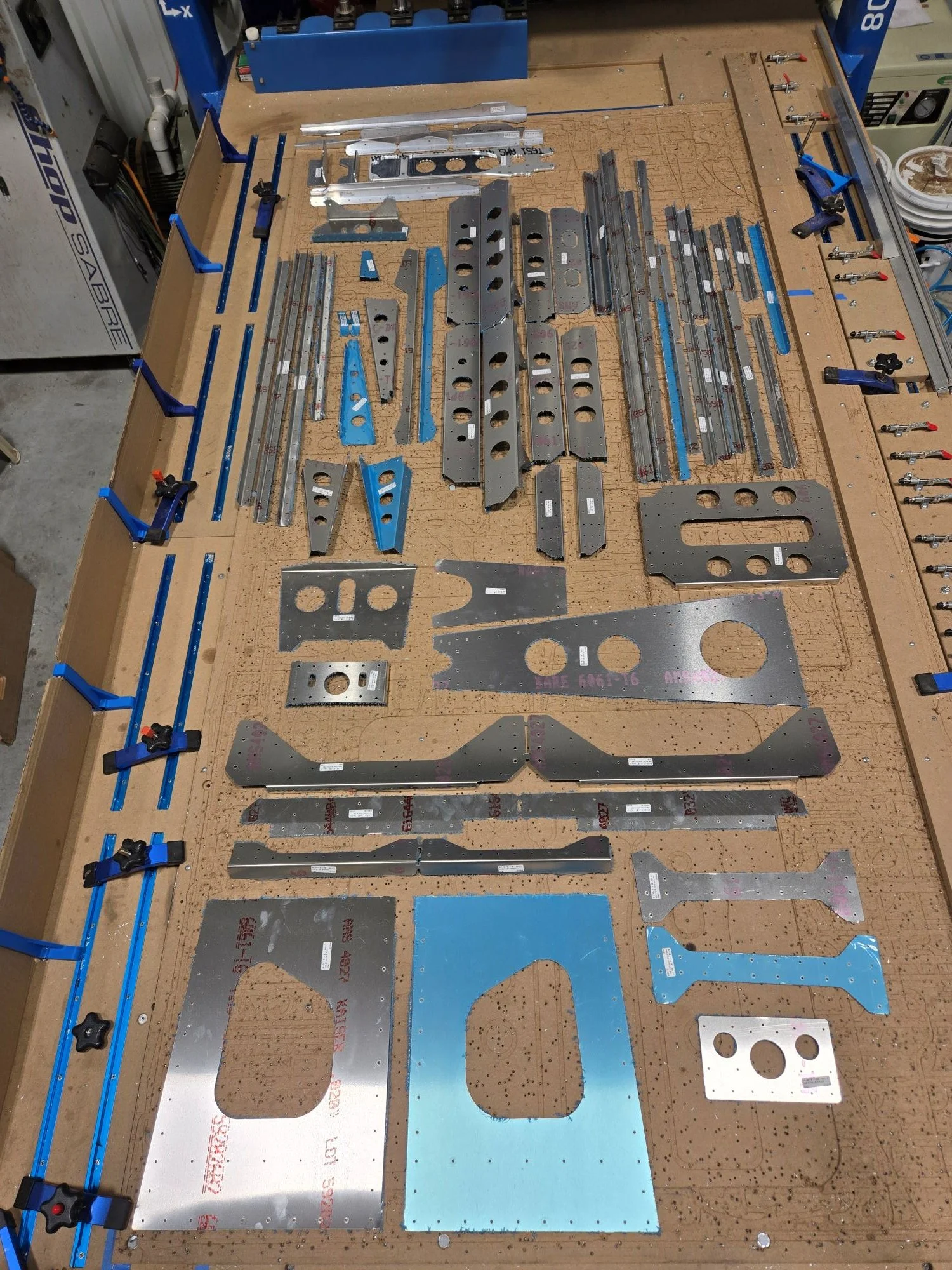
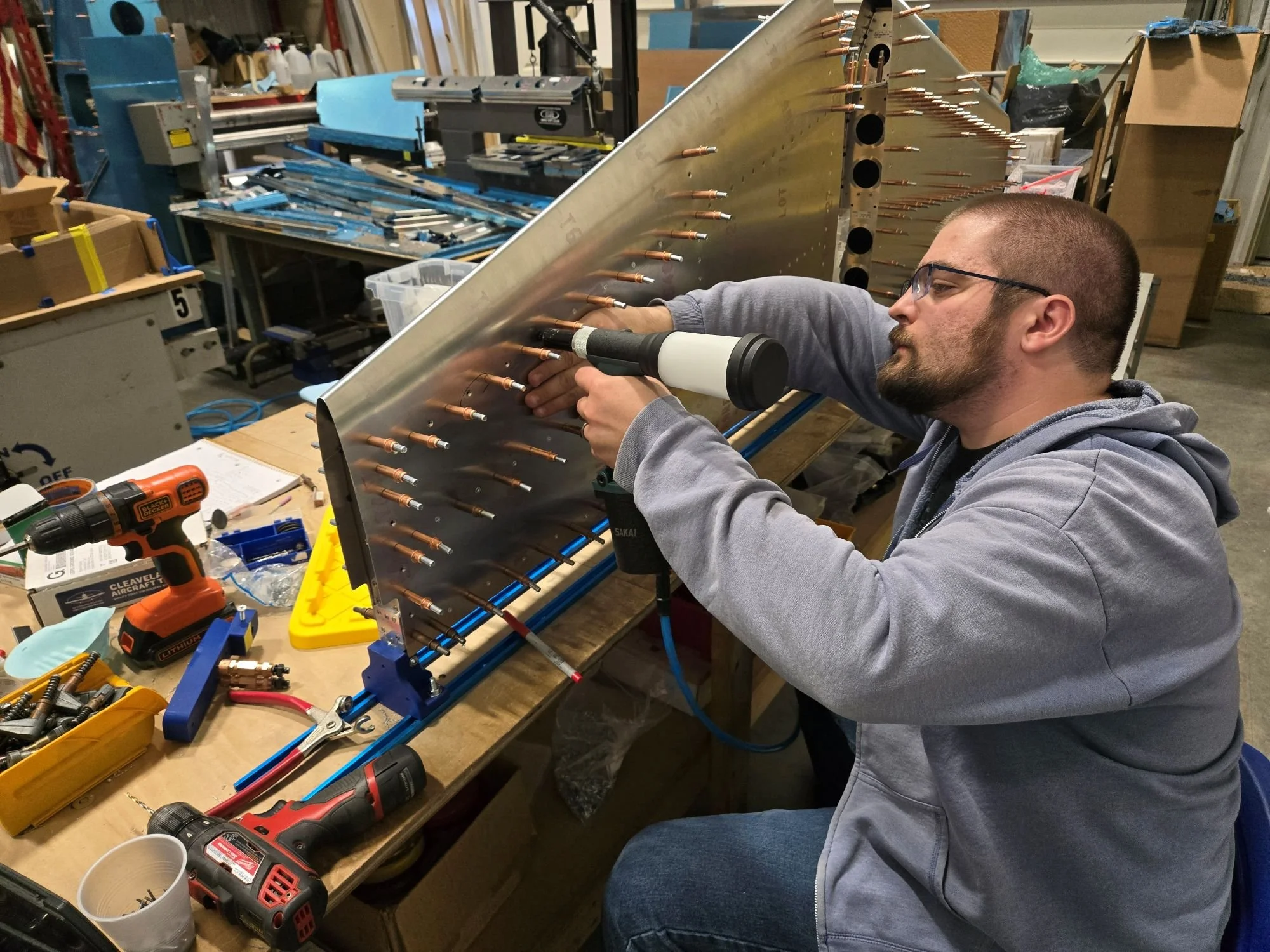
The tail kits are being wrapped up as we work on bending the remaining flanges for the aft fuselage, and Scott has a few final larger billet parts to machine. We are aiming to get these beta tail and aft fuselage kits out well before Sun n Fun so we can spread the good news and have time to focus on our trip south.

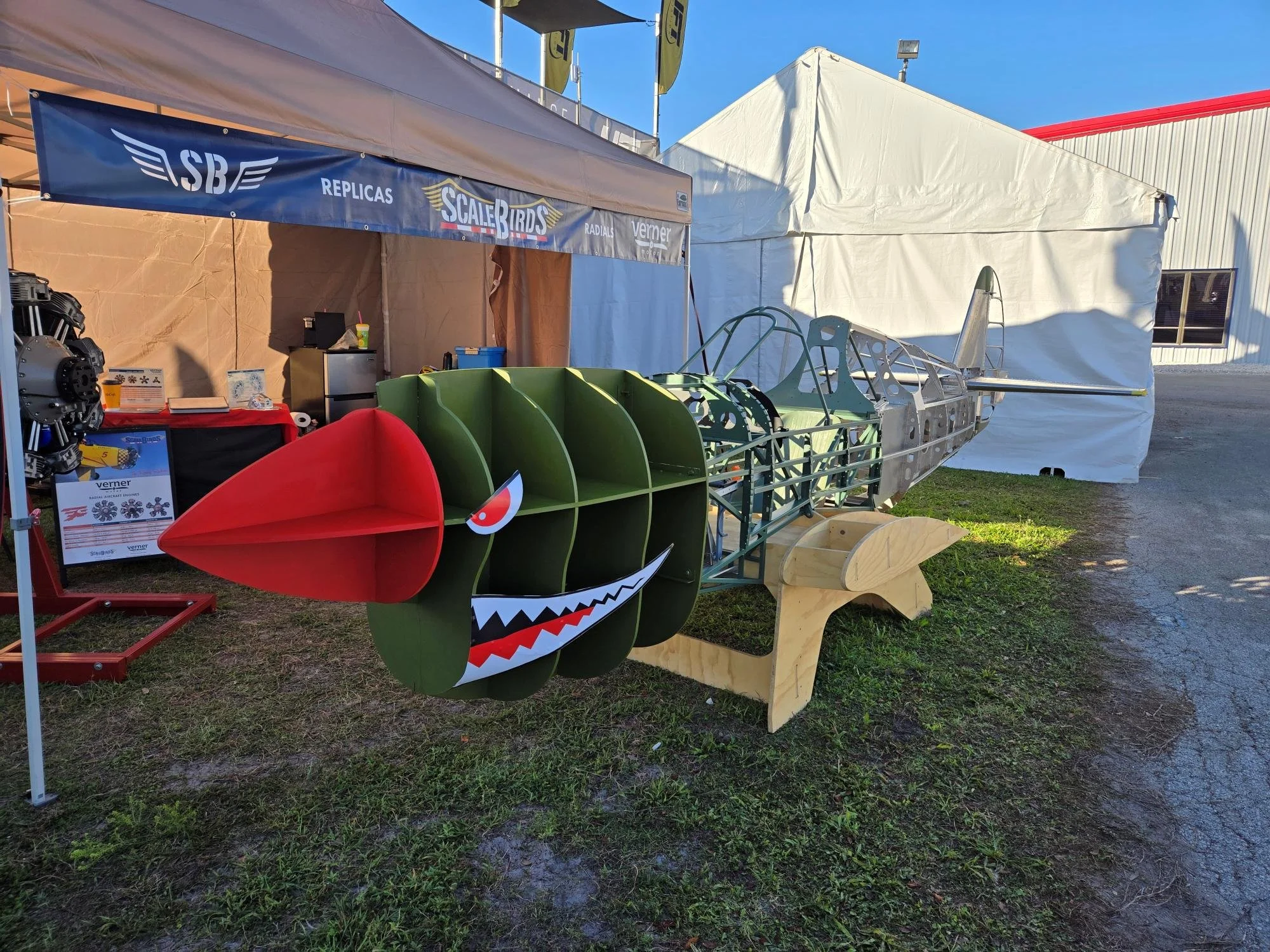
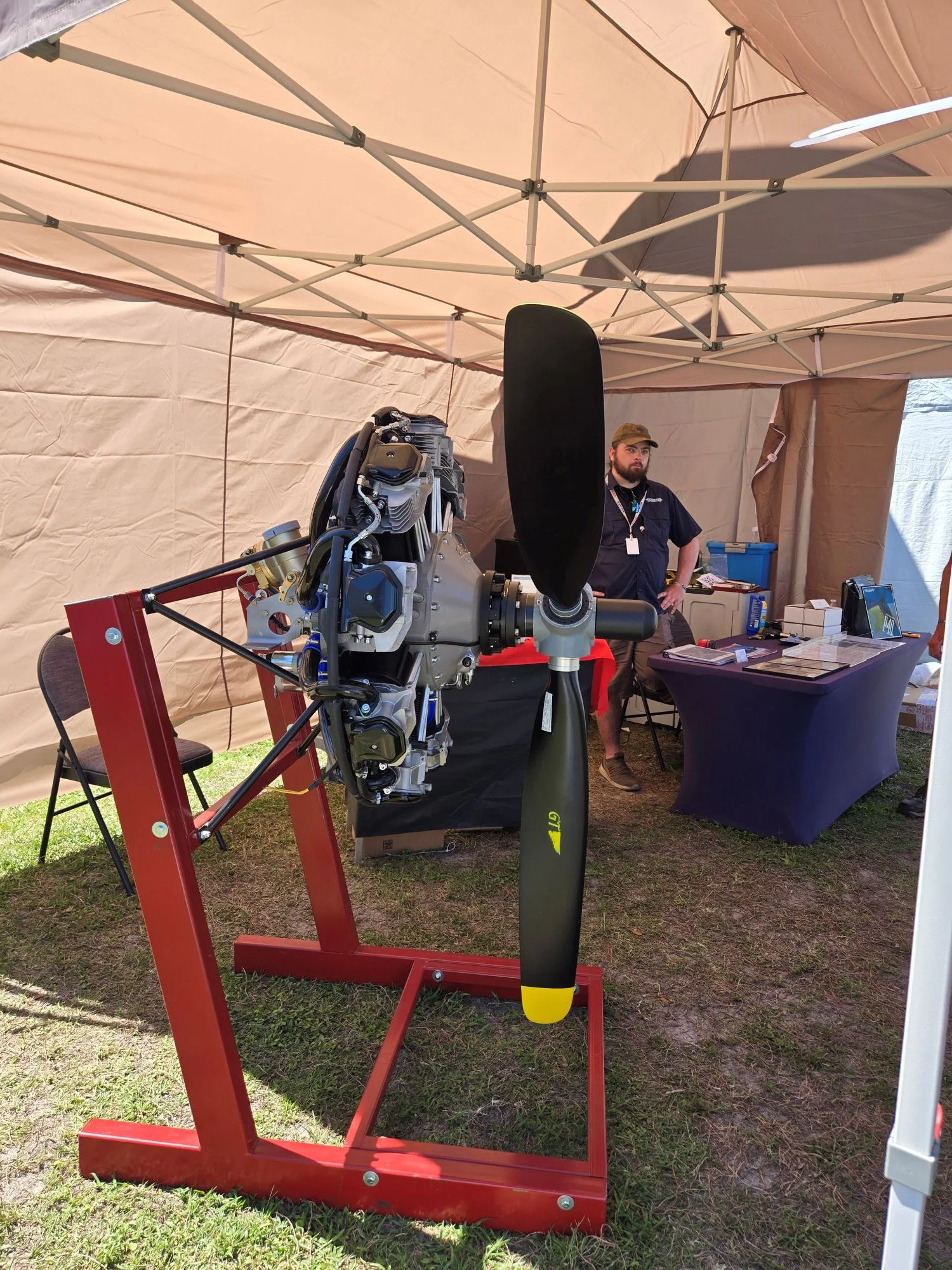
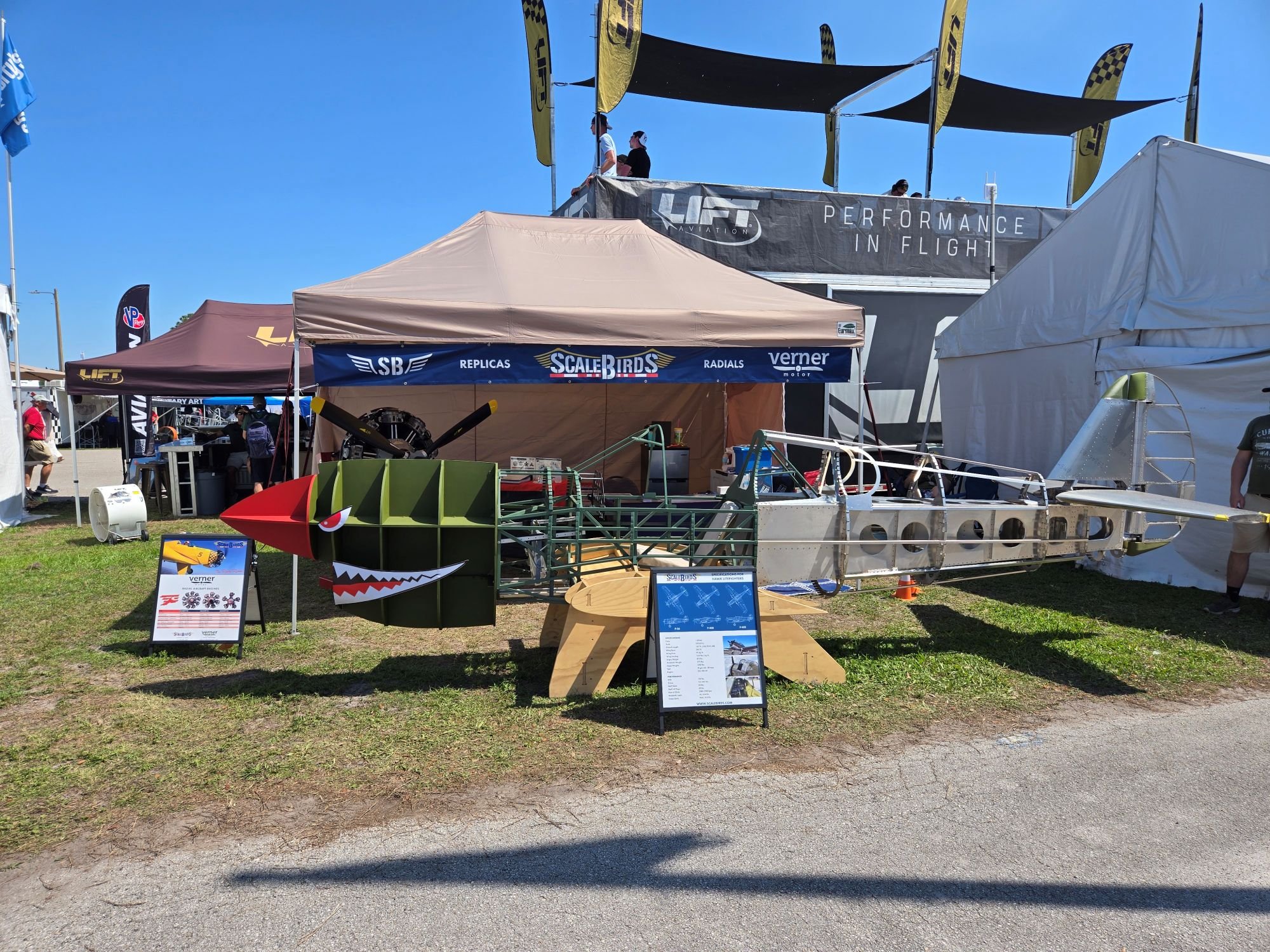
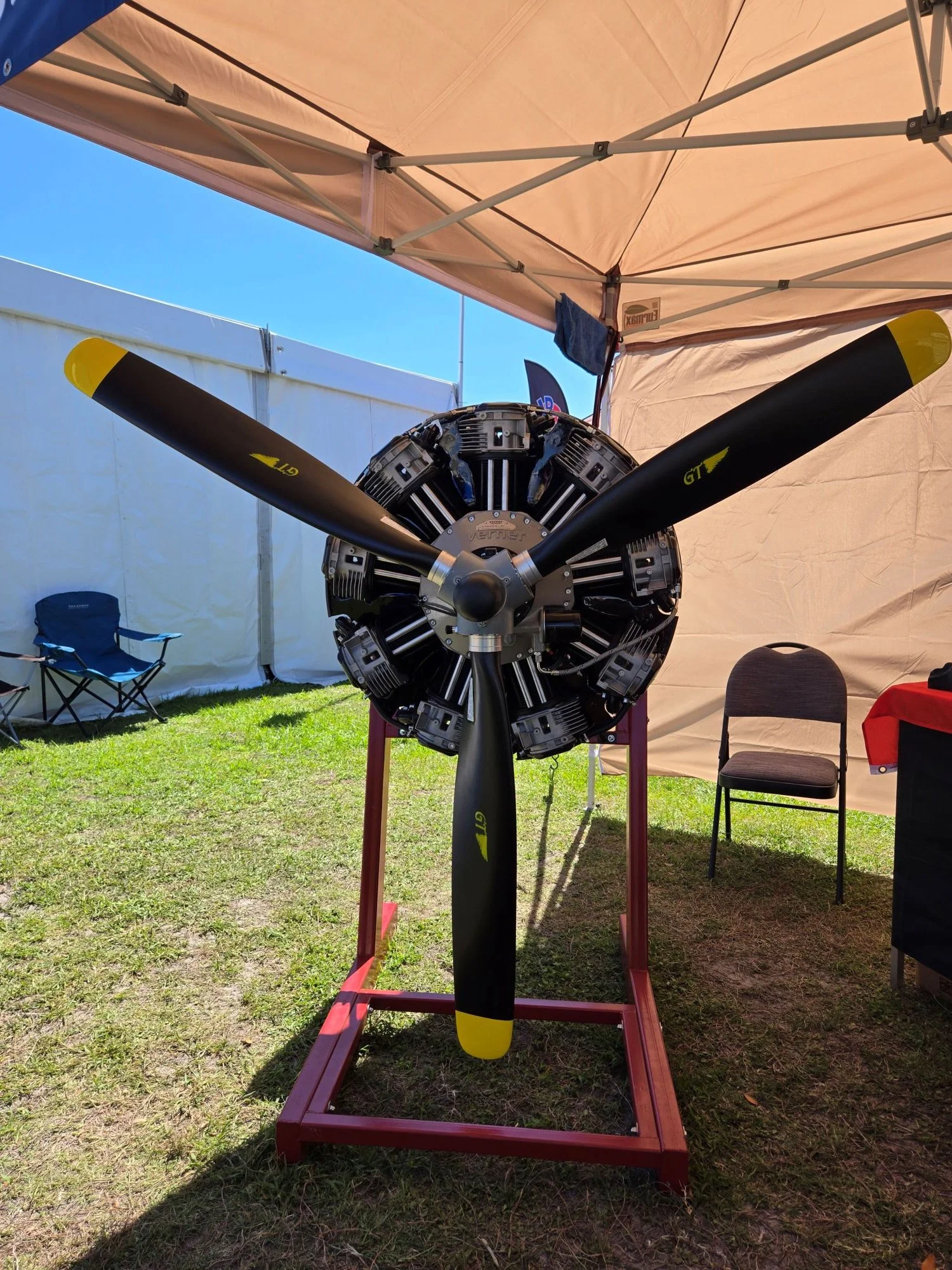
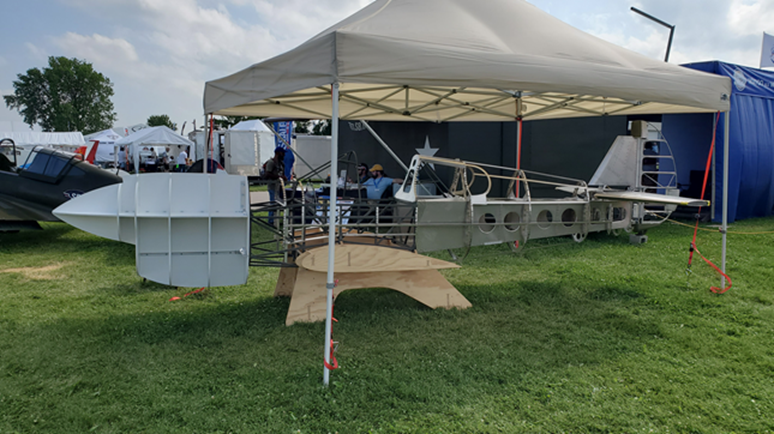
Our plan for Sun n Fun 2026 is to bring the P-40 mockup, same we had at Oshkosh, with a bit added to allow a more interactive experience, though you may need to bring your own airplane noises as it will still be a static display. We previously only had a structural shell to show the assembly process but we’ll be adding some of the components that make it feel more like a workable cockpit. For Verner, we will also be working on an engine and propeller display stand. The bomber project’s first Verner engine is packed for Florida as I type this and will be shown. We may also bring some bonus B-17 parts to display. Our booth will not be big enough for displaying the P-36, so I will not fly it down to Florida. We will be in booth N-096 out in front of Building A, middle way down an aisle. Will be there - hopefully with all this stuff ready to show. We are used to doing some all-nighters before a show. Airshow mode!

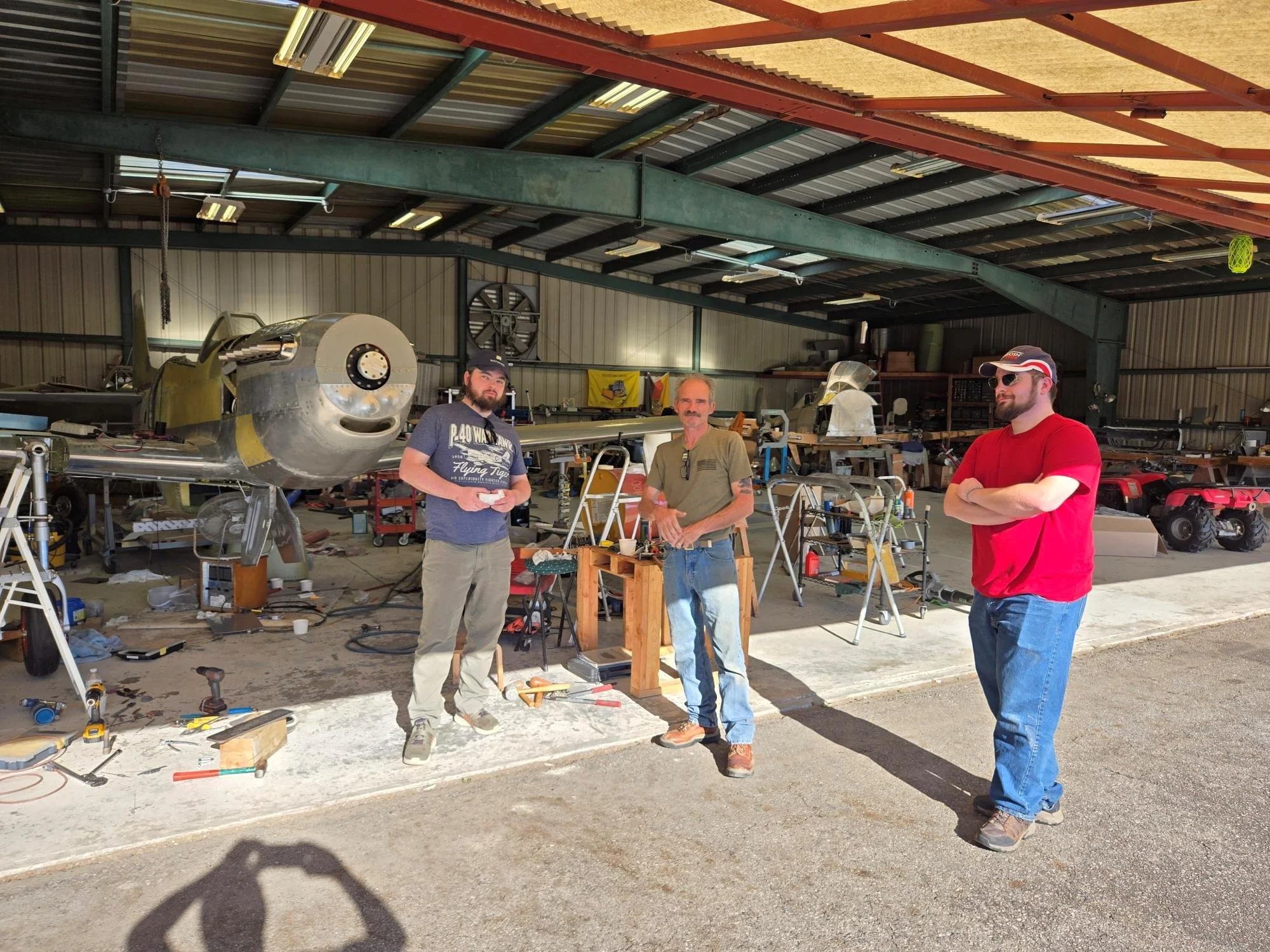
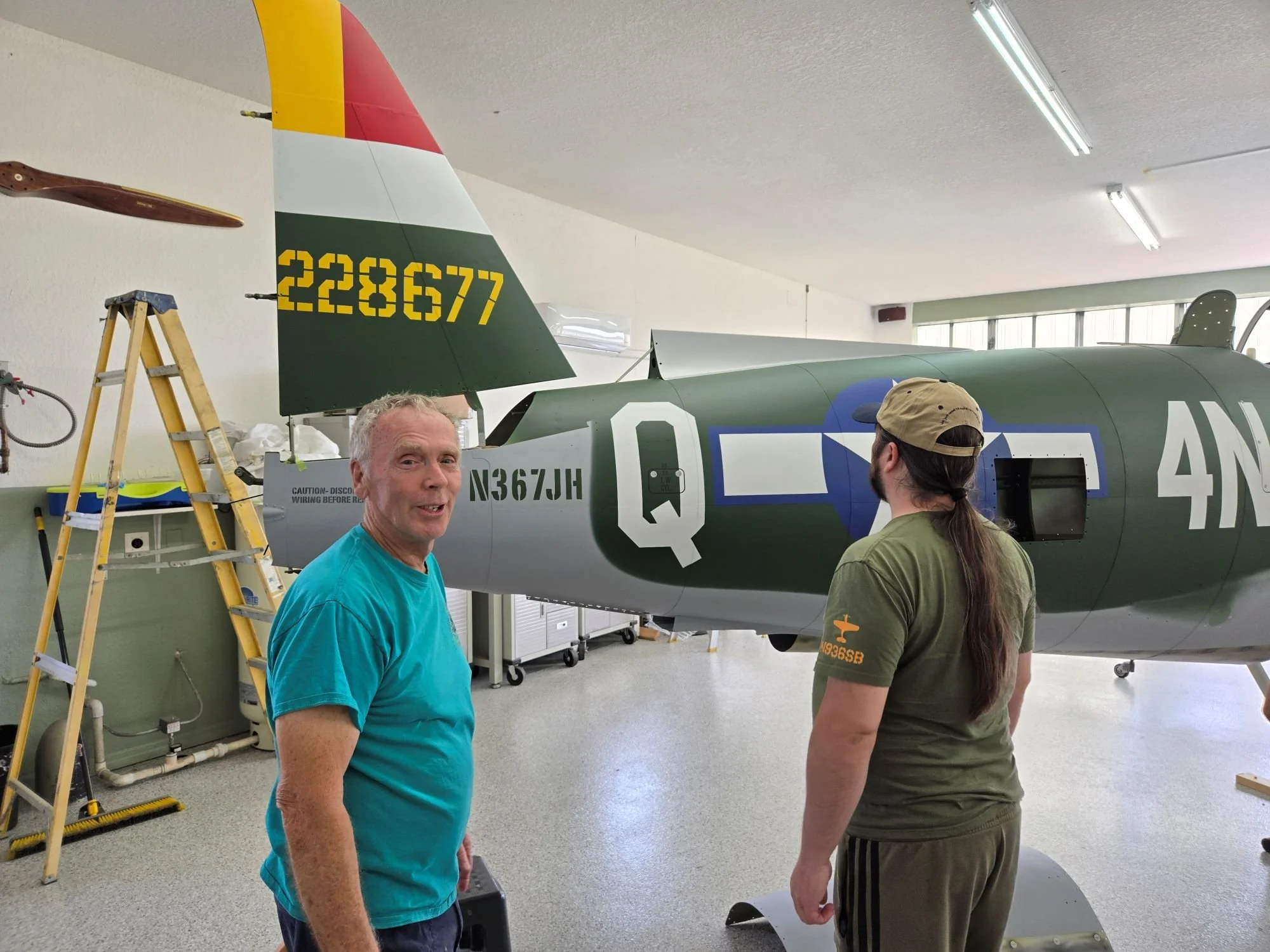
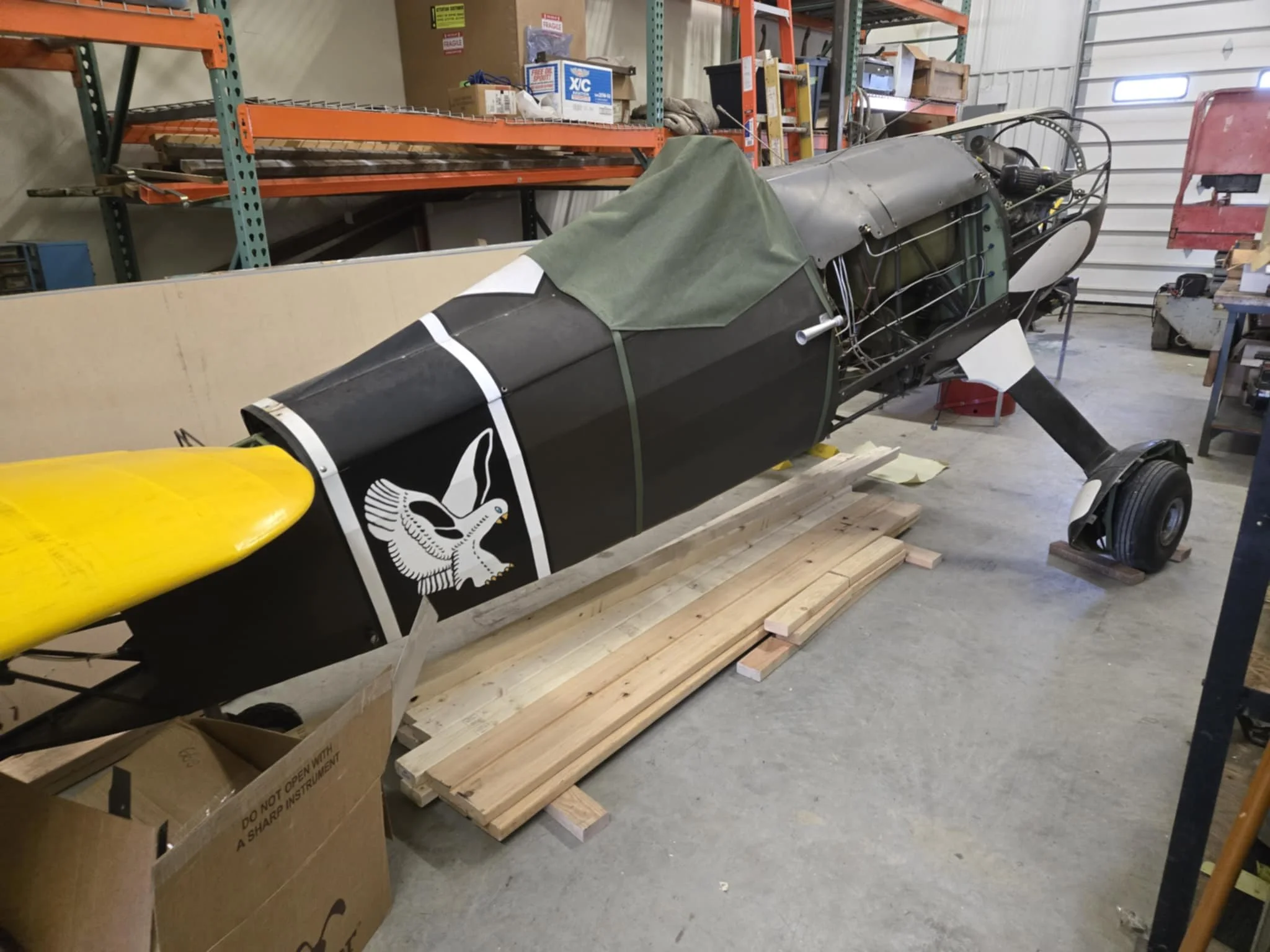
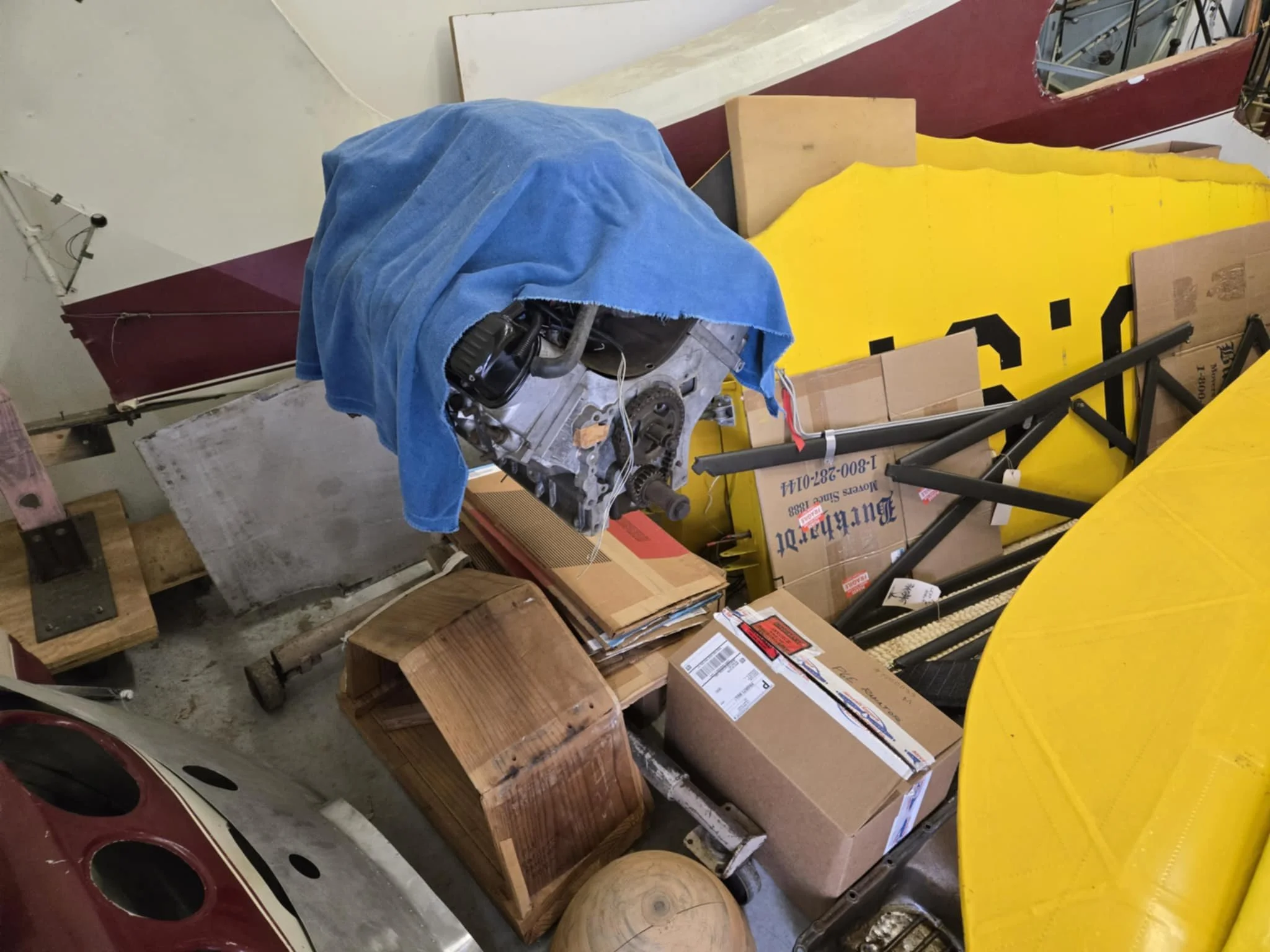
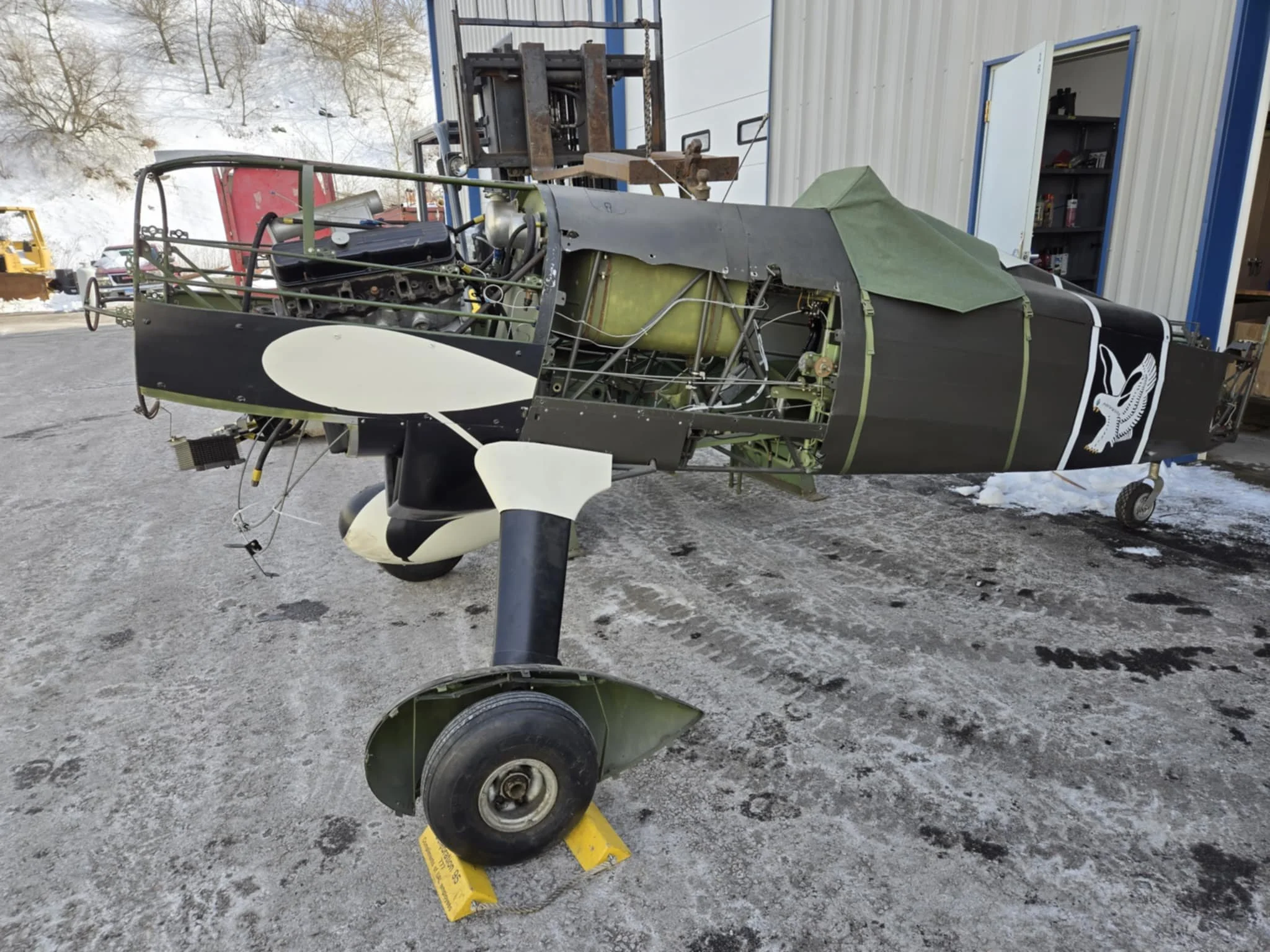
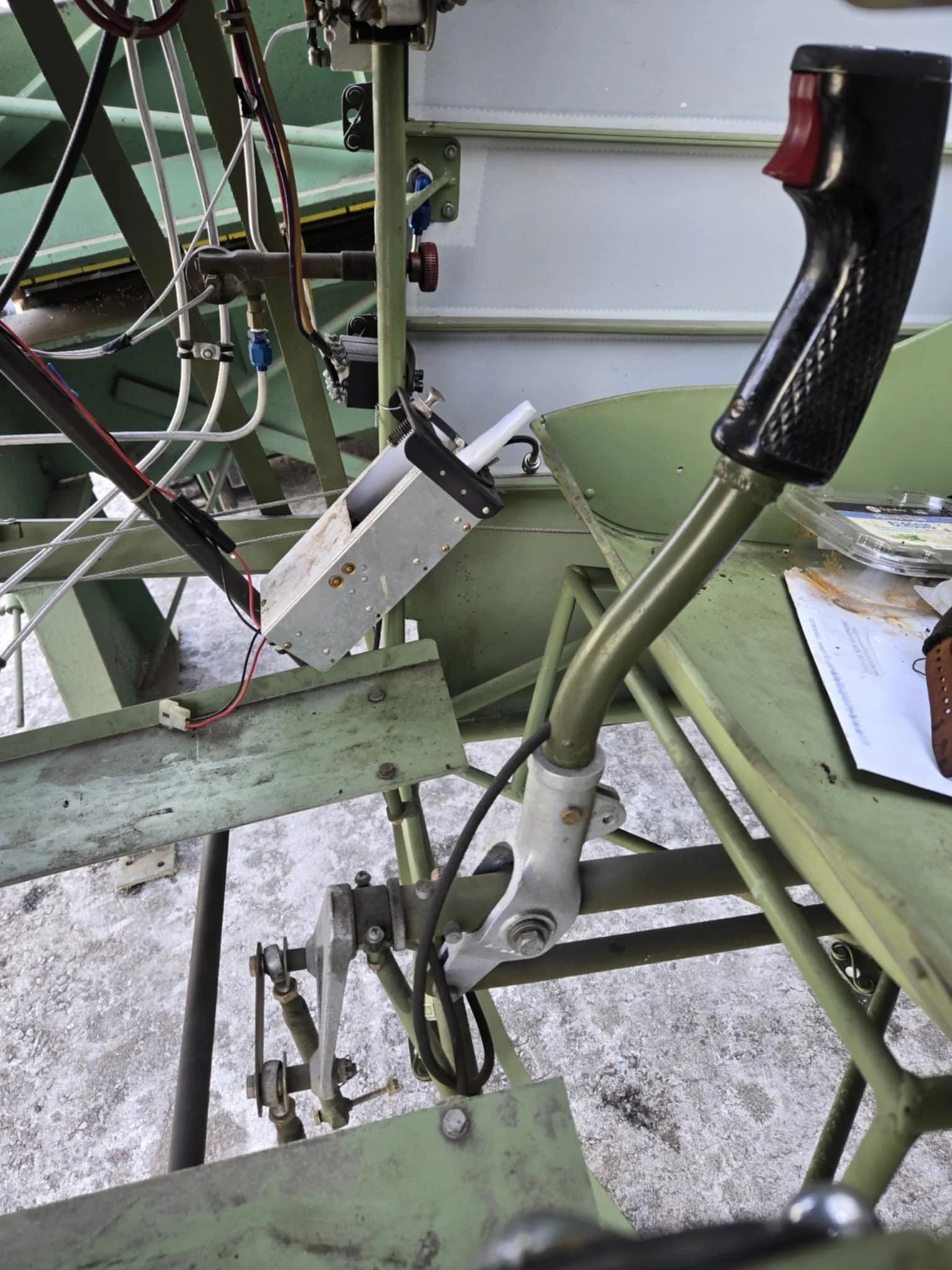
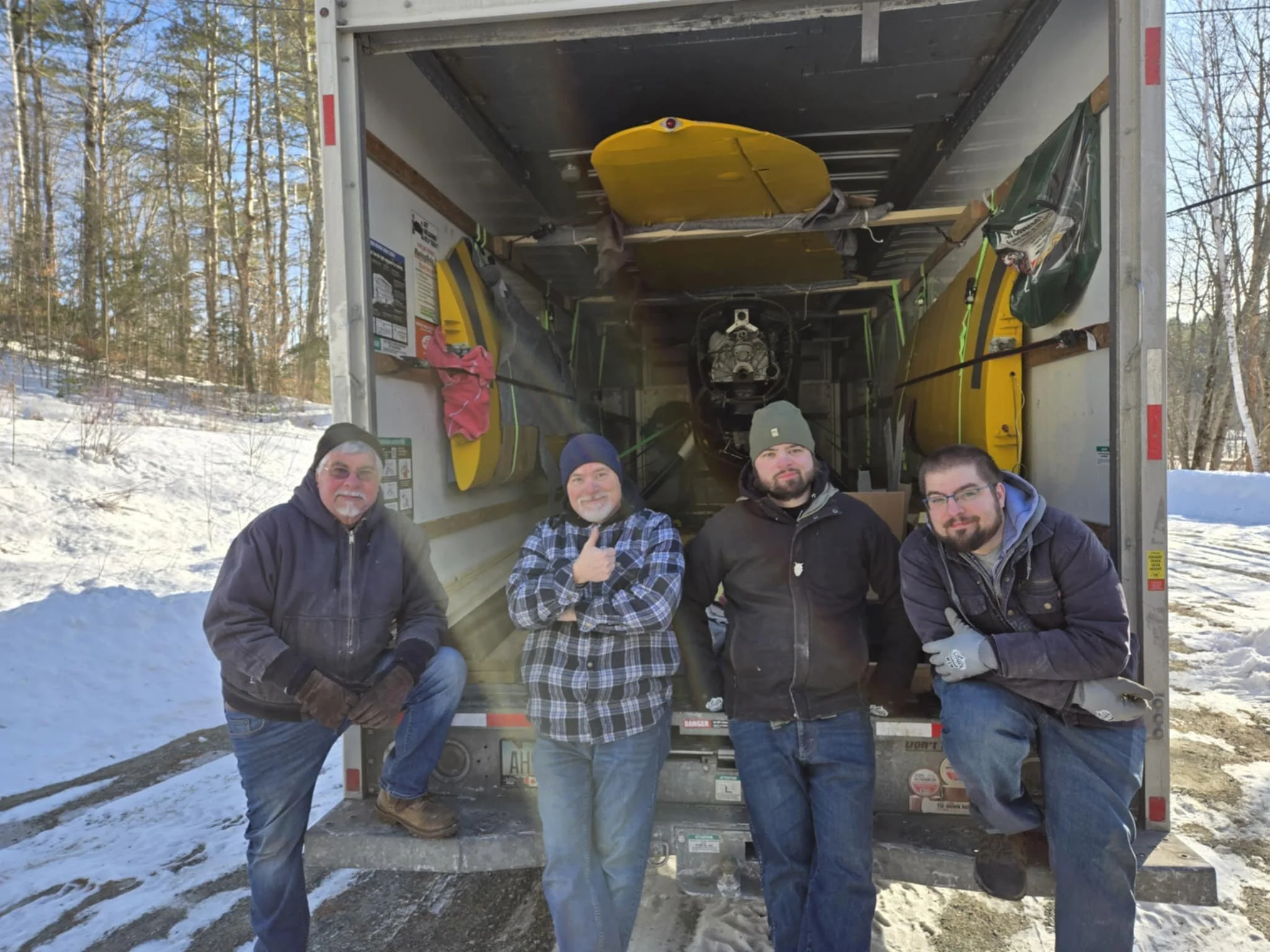
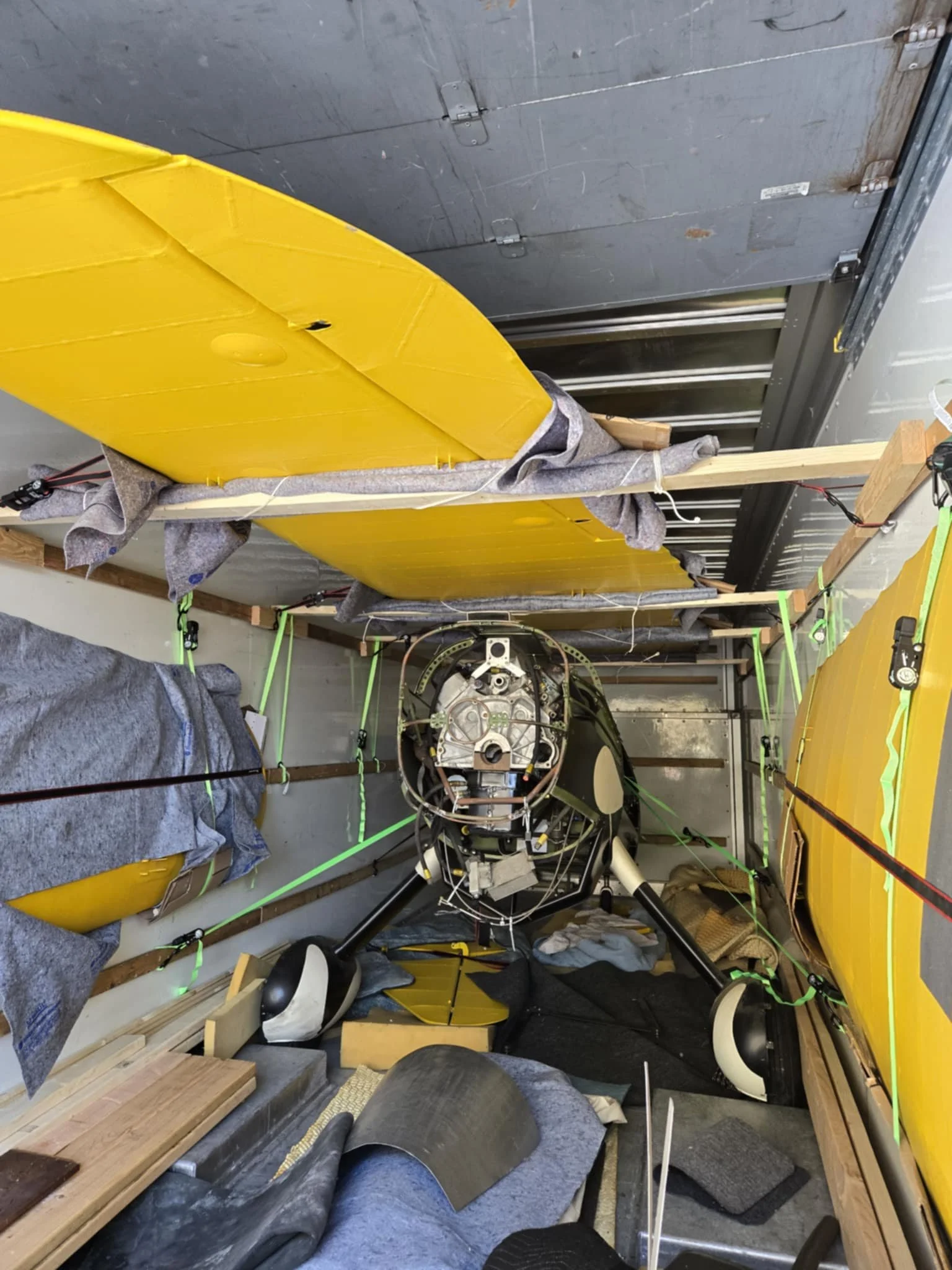
Now for something completely different: we were contacted in late January by a guy we met at the RFA’s Friday night BBQ. We were sitting across from him and his brother, drinking Spotted Cow beers. This gentleman had purchased and was storing a replica 75% Curtiss P-6E Hawk biplane fighter. After our meeting at AirVenture 2025, we had intended to find the time to visit the project, but never did. Well, Andy Gelston called and made us a deal we could not refuse. We will owe him a couple small Verner engines over the next 5 years or so. But, we had to retrieve it from New Hampshire before February 14th or it was going to be discarded. So we agreed and did just that - between snow storms and on a 25 degree day (balmy for NH), we spent four hours driving up to near Grantham, NH, then another 4 hours loading it into a 26ft Uhaul truck and then driving 4 hours back to Groton, CT. Unloaded it the next day at our shop. No damage or trailer rash! The only issue was the fitment engine wasn’t bolted into the mounts and it had moved aft and nose down. See pics. We were fortunate that the bed mount frame caught the engine block and held it - not bending anything. Lucky as the roads were terribly rough - full of pot holes and frost heaves.

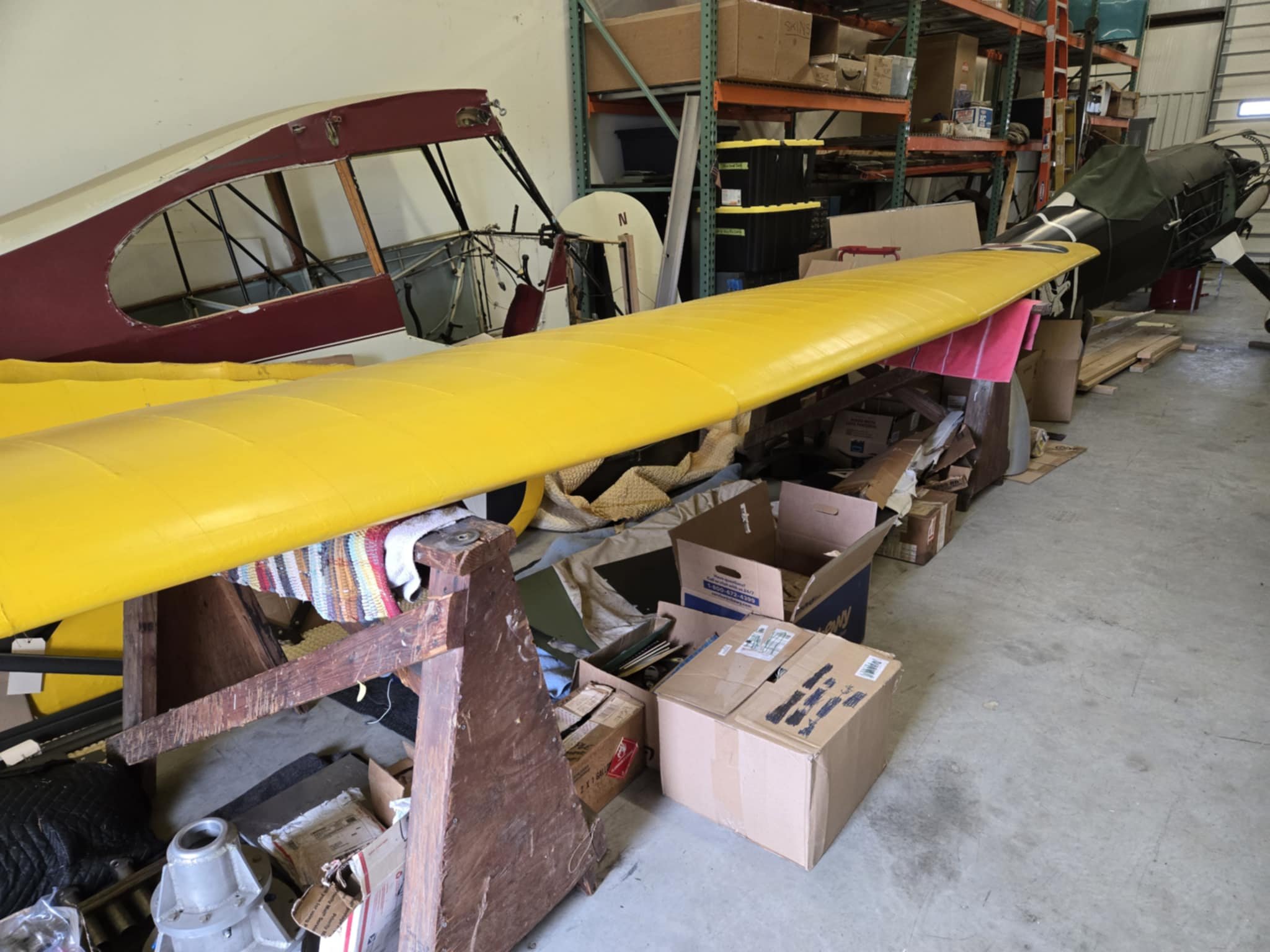
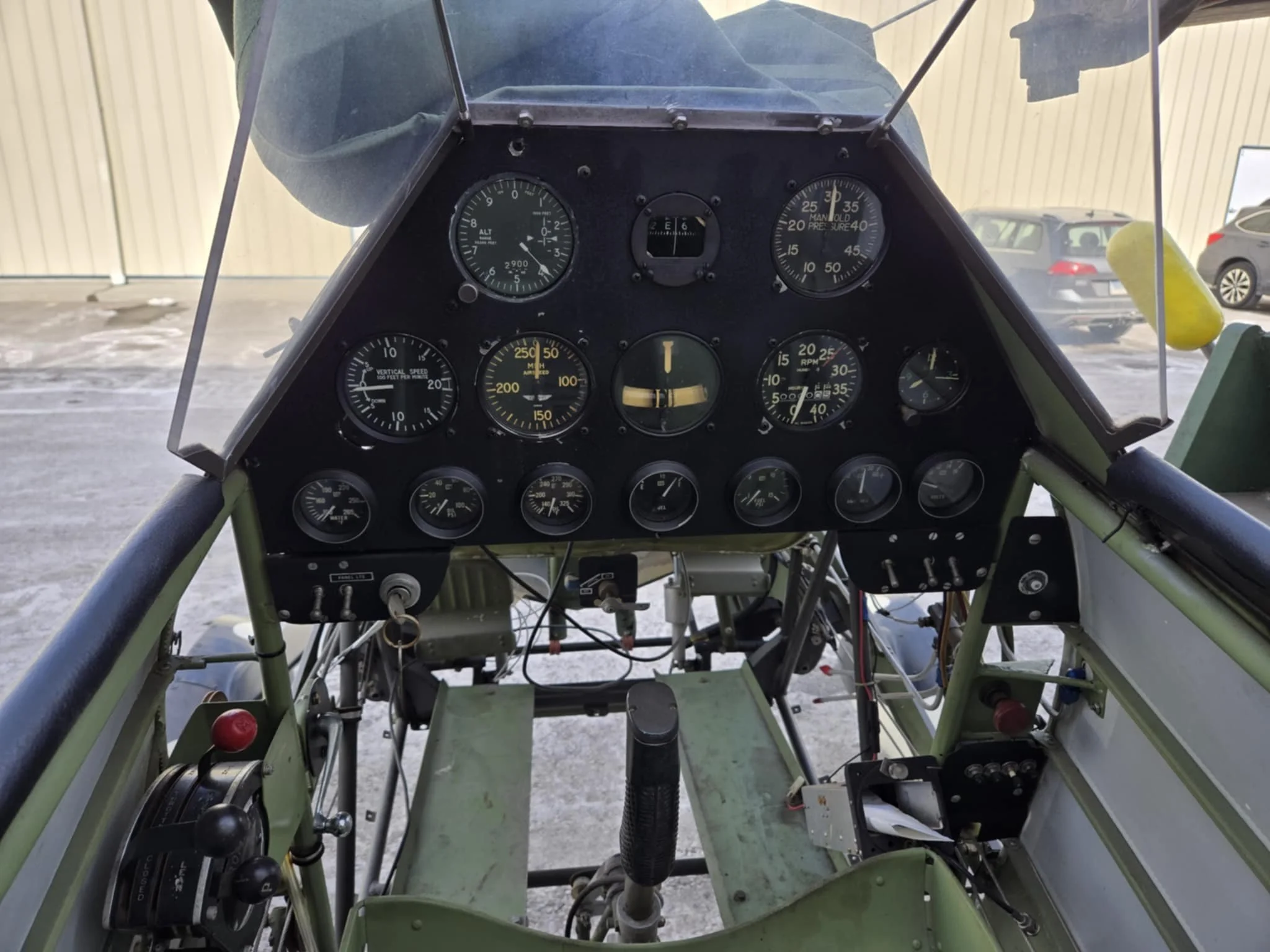
Understand, we need another aircraft project like a hole in the head. We have no room as it is. However, this one is of interest to us and is literally 98% complete and painted already. Instruments and all the systems are installed. N-struts, cabanes, flying wires had all been made and rigged. Cowling, wheel pants and fairings all made. Some are wrapped and out of sight in the pics. The only thing left is the engine and redrive, propeller and custom radiator installation. The redrive shaft and gears being what brought the build to a stand still previously. The custom radiator has to be soldered by a specialty shop - because it is an old school custom shaped aircraft cooler that no one does anymore. The one shop that can do it does them for real fighters at real fighter pricing. We are thinking of changing that to using two smaller racing radiators with a grille hiding them. Although the project has three Buick V8 engines, one being the flight article, we may change the whole engine setup to a Viking 195 or an AeroMomentum AM20. We do have the capability to make the prop shaft and modify the planetary gears for the existing unfinished redrive if we decide to go that way. But we might use this airframe as a kit prototype and we would have the same engine and propeller combination the kit should use - one that is readily available.

Let me be clear - the P-6E Hawk is in long-term storage and we will concentrate on the bomber and our P36/40 and F6F LiteFighters. Then, after we are cruising with the kit business, we will likely get the P-6E flying and back engineer the structure (we do have mostly complete drawings and patterns) into a quick-build kit - possibly in a partnership with another airframe manufacturer. This airplane is really cool up close and will be an eye catching and fun machine. We always thought that if we were to venture into a biplane fighter, the P-6E was the best candidate. It was the last Army biplane fighter and you can see the similarities with the follow-on P-36 Hawk.

As a one-off, scratch-build project, this one was started in 1975 by Joe Locasto in San Mateo, CA and then in its current condition, moved to New Hampshire in the 2000’s for about a 40 year design/build. Structure is designed around a StarDuster 2 biplane that is two seater and aerobatic. This aircraft is a little smaller and lighter so it has very rugged structure. If we could make it a quick to build kit, i think it would be marketable. An interesting thing about the P-6E Hawk is that the exact same airframe from the firewall aft is the Navy F11C-2 Goshawk fighter. It had a radial engine with a speed ring cowling and a higher turtledeck. So, it can be done as an Army in-line engine or Navy with a radial. Very much like we do with the P-40 and P-36 variants.

ScaleBirds will do our best to keep you updated and make more videos - including one of the P-40 mockup up close. As soon as the weather gives us a break. Talk soon.

Three Dimensional

It is Fall already and getting chilly. Almost Thanks Giving! Sorry I have not updated this blog enough. Been heads down, working. The bomber project is a huge undertaking and we are digging into that elephant - one bite at a time. You might see one of the elevators in the pics attached. We will likely add a whole section of pages to our website about the B-17 build. This blog is centered on the LiteFighter series.

After hours and on slow days, we have been working to get Beta kit parts ready to ship. We are also designing and making fixturing and jigs to get the parts consistently formed. The Beta tail kits are about ready to ship after we finalize the hole patterns and leading edge bends for the skins. The rudder and elevator are not ready and might ship separately later. We are getting those ready to cut and assemble again right now. The rudder was made before, but we made some changes to simplify and lighten the structure. The composite fairing parts for the rudder are not the same as the prototype’s fairings so they need all new molds and tooling. Those are coming along very well. Our vendor is doing amazing work. Thanks Rob!

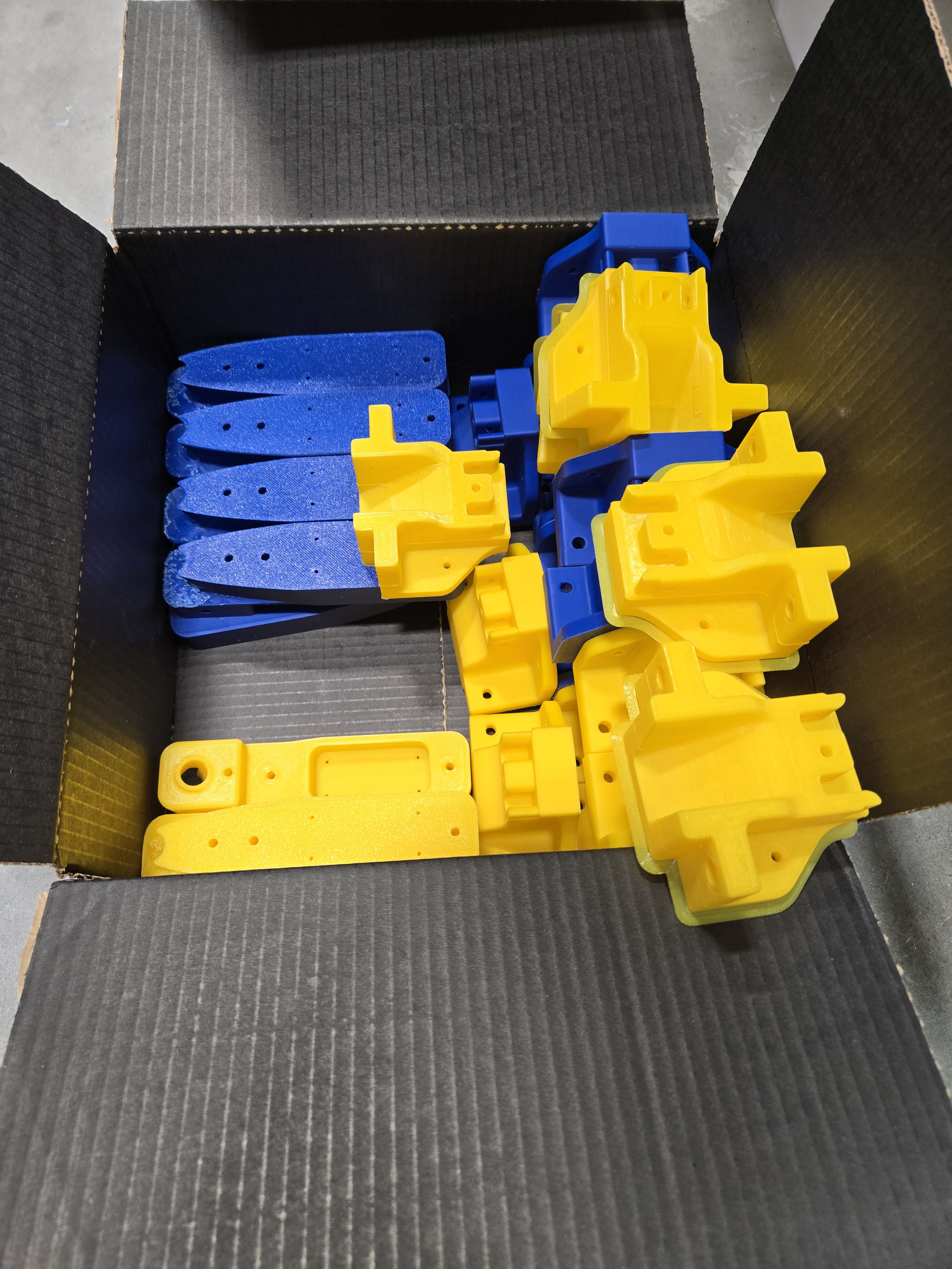
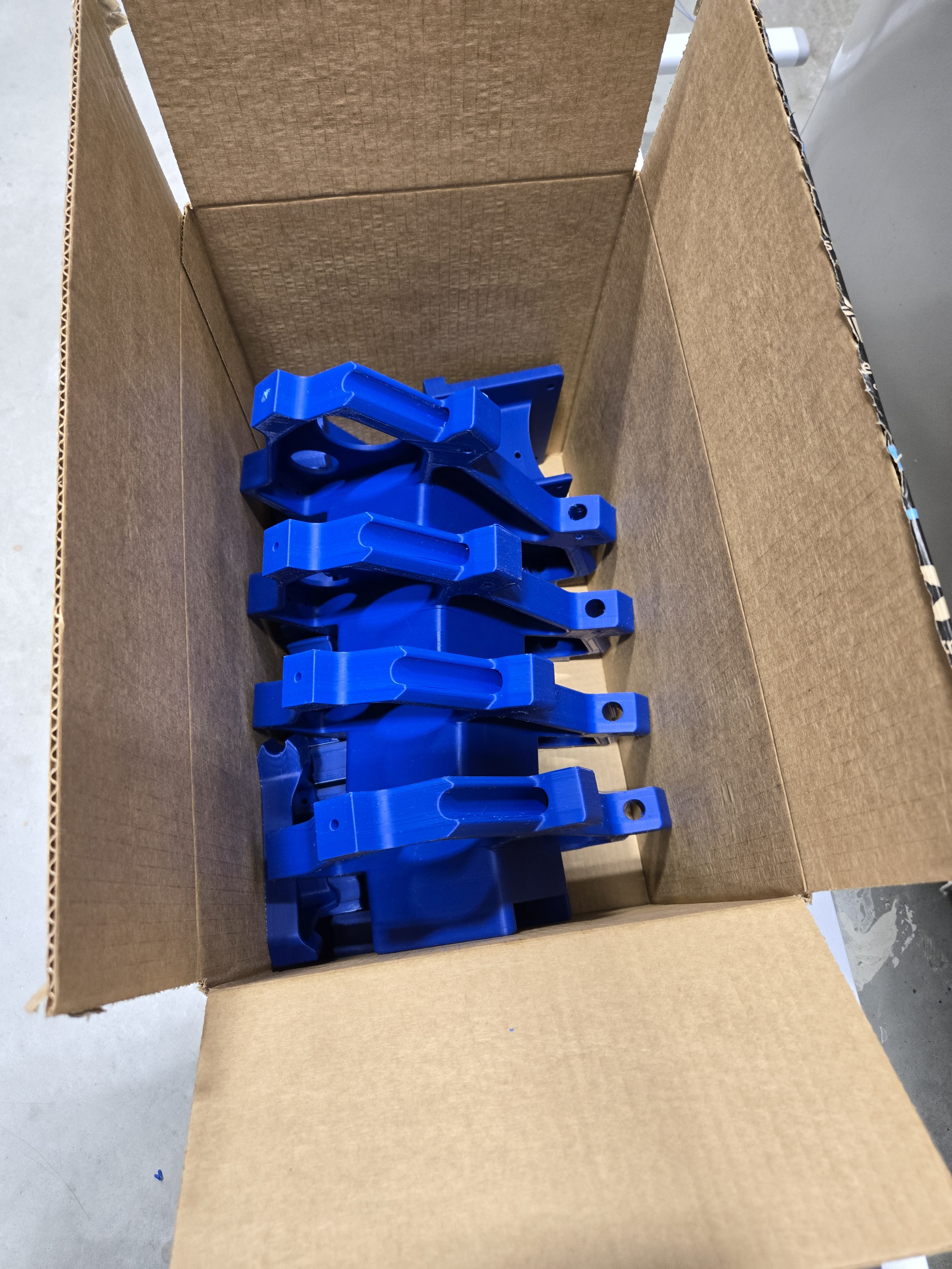
We will get to the kitting part very soon - after a few more parts are ready. The hold up and what we are working on at the moment is the fixture for the horizontal stabilizer. We have made it and are finalizing the hole patterns in the skin panels. This fixture uses 3D printed blocks and two aluminum tracks that the builder will assemble on their bench. This will allow precision drilling of structure by the customer. We are already making batches of these fixture blocks for the kits. We will remake our vertical assembly fixture with the same style blocks and using the same base tracks. We are embracing the latest low-cost mfg methods and strategies. These printed blocks are sturdy enough to hold the parts firmly and light enough to ship reasonably.

We have started our finished goods warehouse with the tail parts inspected, labeled and stacking up. Its a modest start - but a start! We envision a much larger warehouse space and crating area will be needed. Our current spaces are divided up and we have to figure out where to do all the things we do - very carefully. For these tail kits, the crate and boxes used will need to be figured-out and procured. It is exciting to see the birth and growth of this kit company. The business processes, systems, procedures, equipment, work cells, tooling and fixturing. All of it. Of course, the most important part is the customers and getting them their kits. That is finally getting to reality. We can’t wait! Thank you Betas!

After-Action Report: Airventure 2025

Hey ya’ll. Its actually the week after Oshkosh AirVenture 2025 and we are all back in the office and shop. Wow, what an Oshkosh! We had a super busy and productive week at the show. Getting there was a challenge, as was getting home. There’s lots to cover, so here goes:

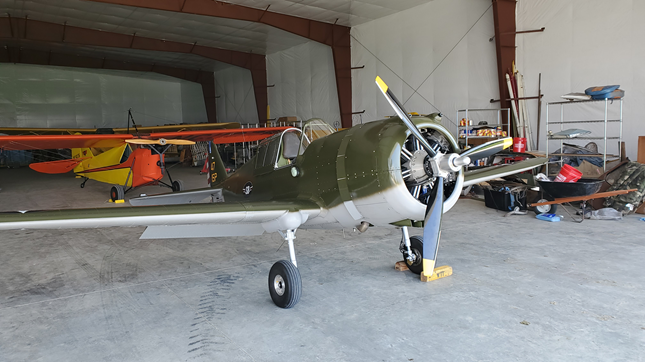
This year, we chose to fly the P-36 in to the show, as the trailer was going to be hauling the P-40 fuselage display frame. The weather was actually cooperating and we started out with haste the morning of Saturday the 19th; the truck hauling the trailer, and the P-36 hauling me. This was all after everyone put in a very late Friday night to finish the P-40 frame and load up the trailer, which is typical for us trying to get everything right and make it to the show on time.

The P-36 was chugging right along and flew great, but I couldn’t say the same for my Dynon/iPad GPS combo. I was struggling with dim screens, dying batteries, loss of connection, and general nonsense almost the entire trip to Oshkosh. Somewhere south of Williamsport, I ran into some very low ceilings and poor visibility conditions. I had to deviate and found the Susquehanna River and an airport runway staring right at me. Just in time! The older fella who ran the FBO knew immediately that this was a P-36 and a Pearl Harbor paint scheme. How? Well, he’s an aviation artist and even had a mural in the pilot’s lounge of Rasmussens’ Pearl Harbor P-36 in a dogfight. What a coincidence - we made his day!

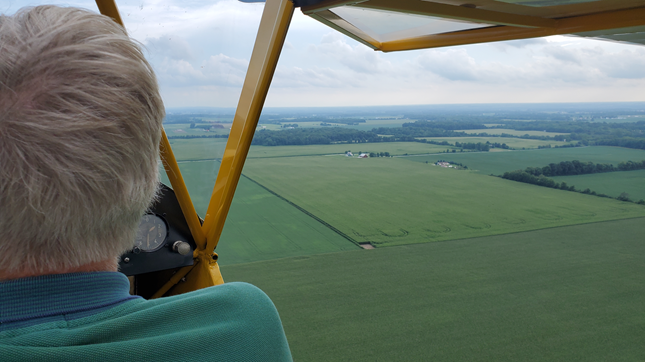
The sky broke and the sun popped out, revealing clearing skies to the West. I was off again before rain stopped me around dinner time over Akron, OH. I picked Wadsworth Airport and set down. My family was driving right along I-76 in the truck and met me a few hours later for a large hotel room. Last room in town - not cheap! But it was awesome to see my family right then. The next day, I was stuck with low ceilings with sucker holes every once in a while, so I stayed put and waited it out. A kind man at Wadsworth asked if I wanted a hangar for the day and night - yes! I was treated to his collection of vintage aircraft projects. He couldn’t have been nicer and I was welcomed to stay the next night at the FBO which I did. I’m happy to say I made many new friends among the CFIs there.

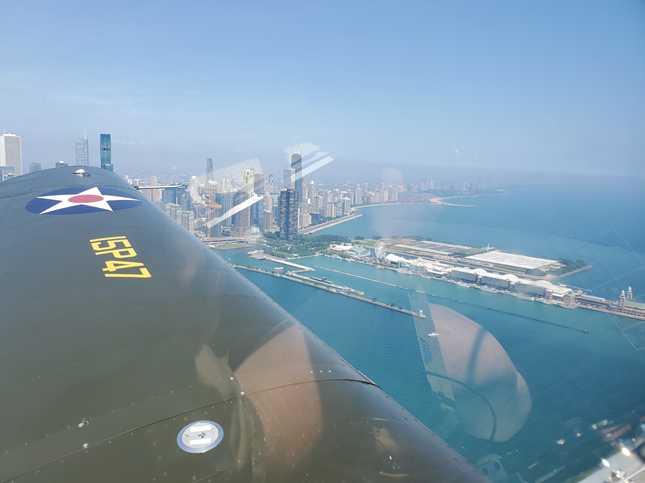
Then I was off again the next morning and winging my way to Oshkosh via the Navy Pier corridor. What a sight! I did the Fisk arrival which was way out of the way. Hardly anyone in sight along the entire route until over Fisk. I landed right before the Monday airshow shut down the airspace - whew! I taxied behind the Follow Me golf cart and they drove me all over the place - finally stopping and asking me where I wanted to go. To my booth by Vans Aircraft! Then taxied back over to the Homebuilts exhibit area as a crowd was gathering to see the P-36 and hear the lovely sound of the Verner radial engine. It was a grand entrance to the show! Then, Bam! The show was on! It started in a frenzy and didn’t let up all week until the last day on Sunday 27th. We had so many excited fans of the project. We had lots of interest, many people signing up for our Beta Builders program, and some even putting money down. Just what we had hoped for!
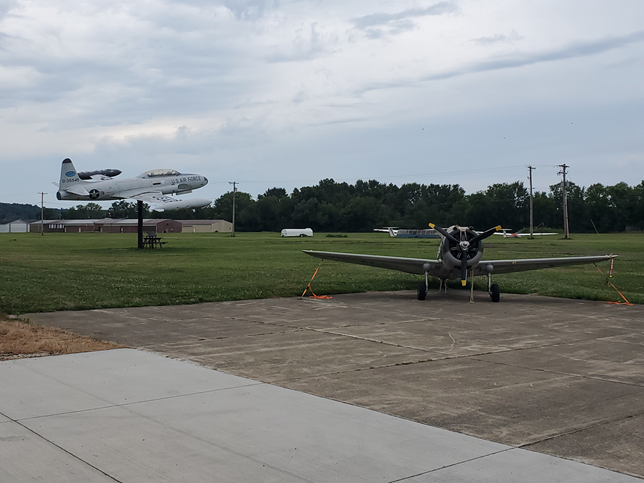
Our booth had our trailer with an awning, acting as shelter for our desk and table. We had the P-36 out in the corner of the booth space. It was easily seen from a distance being on a corner booth this year instead of burried half way down the aisle. The corner space cost us more money, but it was worth it I believe. This year we also had our P-40 fuselage on a display stand. It didn’t have the skin on it - so you can see the structure and bones of the bird. We added a profile view of the cowling with section slices on one side to show the contours of the machine. This must have struck a nerve as everyone was praising our decision to display it this way. You could see the lines of the machine were very accurate and gave a good sense of size and volume, but you can also see the primary structure inside, which showed off how we can make other WW2 fighter models with this same frame.

We had Vans Aircraft, Sonex, Panther, Stewart 51, Bede and many other companies engineers and sales folks stop by the booth and check out the planes. We showed them everything and let them sit in the P-36. Fun stuff! I finally met Randy Shlitter of Rans Aircraft and had a great time talking aircraft design. Awesome guy! Of course, we also had old friends and customers stop by regularly and we had a wonderful time with them. Excitement was the rule of the day, every day! I want to thank all of you who stopped by our booth; it was a pleasure for us to meet each and every one of you. You are why we are doing this!

I have to say it wasn’t all fun and games. Its a lot of hard work to get there on time, stand in the sun all day and answer a billion questions, then go to dinner and crash; just to do it all again the next day. My crew was tireless and pushed on throughout the week, and I have to give big props to the team as well.

We met the sponsors of our B-17 bomber project for a very nice dinner at our rental house. We spent a wonderful time together reviewing design documents and many family treasures involving the B-17 and their legacy. We are humbled to be a part of this endeavor and hope to bring you along on our journey.

I found out later in the week from a fellow Connecticut EAA member who stopped by that there was going to be a memorial service for Joe Gauthier. Joe was our CT resident DAR: the first DAR in the country! He was one among many distinguished EAAers who passed recently. I had to go to that on Sunday and it was a very appropriate service. Kudos to EAA and Jack Pelton for what he said and how it was arranged. A fantastic missing man tribute, made up of aircraft attending the airshow, topped it off. Sunday was brutally hot and humid, especially compared to the relatively mild rest of the week. I think I got over-heated and had to sit in front of our fan for a long time after getting back from the service.

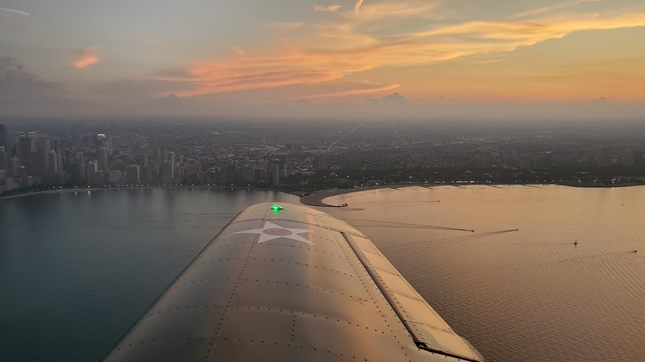
Then, just as suddenly as it began, it was over. I had to run over to the iFly booth and talk to them about a new GPS system. We had talked earlier in the week, and they said to visit as they were closing for a special opportunity - to purchase their floor model before its full release to the public. We spent hours tearing down the exhibit and packing the trailer up with the P-40 fuselage and our booth supplies. We pushed the P-36 to the grass, then I fired up and joined the conga line to get out after the airshow was over. I departed around 6pm in very hot air and managed to make it down to Chicago and enjoyed a beautiful view of the Navy Pier at sunset. With a wild orange sky and the lights of the city coming on, it was amazing! I landed in Porter County airport after dark. I was grateful to have an air conditioned vestibule to hang in and for my family to rescue me later in the night. Breakfast was at a local restaurant - I was recommended a place called ‘Viking Chili Bowl’. With a name like that, we had to try it!

We had hoped to visit the Champaign Lady, but during breakfast we discovered the museum was, unfortunately, closed on Mondays. Afterward, my family dropped me off and headed for home. I flew to Dayton area to visit a good friend, and Verner customer, Rick Shultz and his Grand Champion 2024 Hatz Classic. All was going quite well.

That is, until 19 miles from Andy Barnhart Memorial Airport, my engine power dropped significantly and started making a terrible racket. I used the Nearest Airport mode on my brand new iFly GPS X7 tablet (while everyone who ordered one had to wait another 3 weeks, I was the first customer to get one right there at the show!) 3.6 miles to Hartzell Airport in Piqua, OH. I made it 3.6 miles to Hartzell Airport in Piqua, OH on partial power. Rick’s good friend and A&P Mike Chappe met me there and we diagnosed an issue with the cylinder. We found a broken rocker arm hold down stud. It had just snapped at the base. We could get the old base out of the head and all the parts were sitting in the valve cover. The valve was not stuck, so we don’t know why this happened. This is the first time this has happened for a Verner engine; lucky me!

Well, I spent the whole week after Oshkosh near New Carlisle, OH with friends and had a great time, enjoying good food and good conversations. I did manage to visit the Champaign Lady after all! Once I fixed up the engine with a borrowed part from another customer, I flew back home on Sunday, August 3rd, with the brand new iFly GPS X7 working perfectly the entire time.

Meanwhile, the family had pushed through and arrived home at 3 AM on Tuesday, the 29th. Troopers! I met and made new friends all along this journey, and I am so thankful for how it all happened. It was a true adventure!

We are all back home again and getting back into the swing of it. Work is never over, so if you haven’t heard from us - please send us an email, call, or text. We are back on the bomber tail parts and finishing up the Beta tail kit planning. Expect more updates shortly.

Sam

Twas the Night Before Air Venture

'Twas the night before AirVenture, anticipation is high,

Pilots all stirring, beneath the warm summer sky.

Tickets were purchased, and campsites were booked alright,

Off to Oshkosh, Wisconsin, for the glorious aviation sight!


The aircraft were cleaned, gleaming so bright,

Across the nation, pilots spread their charts around, for their VFR flight.

Then what to my wondering eyes should appear,

But an EAA notice, filling all of us with cheer.


Pilots arrived like a great flock of seagulls, to OSH(kosh) they flew,

With NOTAMs and tips, for routes some old and some new.

"Now, FISK! Now, RIPON! Now, WARBIRD! and SEAPLANE!"

Controllers cried, guiding each aircraft around the blustery summer rain.


From Fond du Lac's pattern, to Wittman's main gates,

Thousands arrived, defying the fates.

Up to the heavens, they soared,

With wings full of promise, and dreams they adored.


Static displays lined the airfield, row after row,

From ultralights so tiny, to the biggest jets that could ever go.

A symphony of engines, from the P-51s at dawn till the twilight of night,

A chaotic and mesmerizing ballet, a truly breathtaking sight.


We will explore all the hangars, no detail to shirk,

From vendors with gadgets, engrossed in their work.

Then out on the flight line, a roar fills the air,

As aerobats tumble, not seeming to care.


And what to my inquisitive eyes did I see,

Near the homebuilt displays, for all to agree?

A new ScaleBird creation, so perfectly wrought,

Another miniature marvel, exquisitely thought.


Then Sam jumped into the Hawk, with a loud final whistle,

And away he flew, like the down from a thistle.

But I heard him exclaim, as he vanished from sight—

"Happy AirVenture to all, and to all a good flight!"


As I write this, Scott, Nate, and Karen are already set up in Oshkosh, Sam is still waylaid in Ohio with our prototype P-36 Hawk due to midwestern summer weather, Shin is out in Guam for his other job, and I’m holding down the homefront here in Connecticut (toddler, work, running for local office, crumbling 115 year old house).  I can honestly say after spending well over two hours trying to write the ultimate Airventure parody of ‘Twas the Night’ (and admitting defeat, asking Grok and Gemini for help, summarily ignoring their inputs, trying again, incorporating some of their significantly better rhyme schemes, and editing it all together), I am having some serious fear of missing out on this annual gathering of all thing aviation.  That said, this AirVenture we at ScaleBirds have something new for all of you!

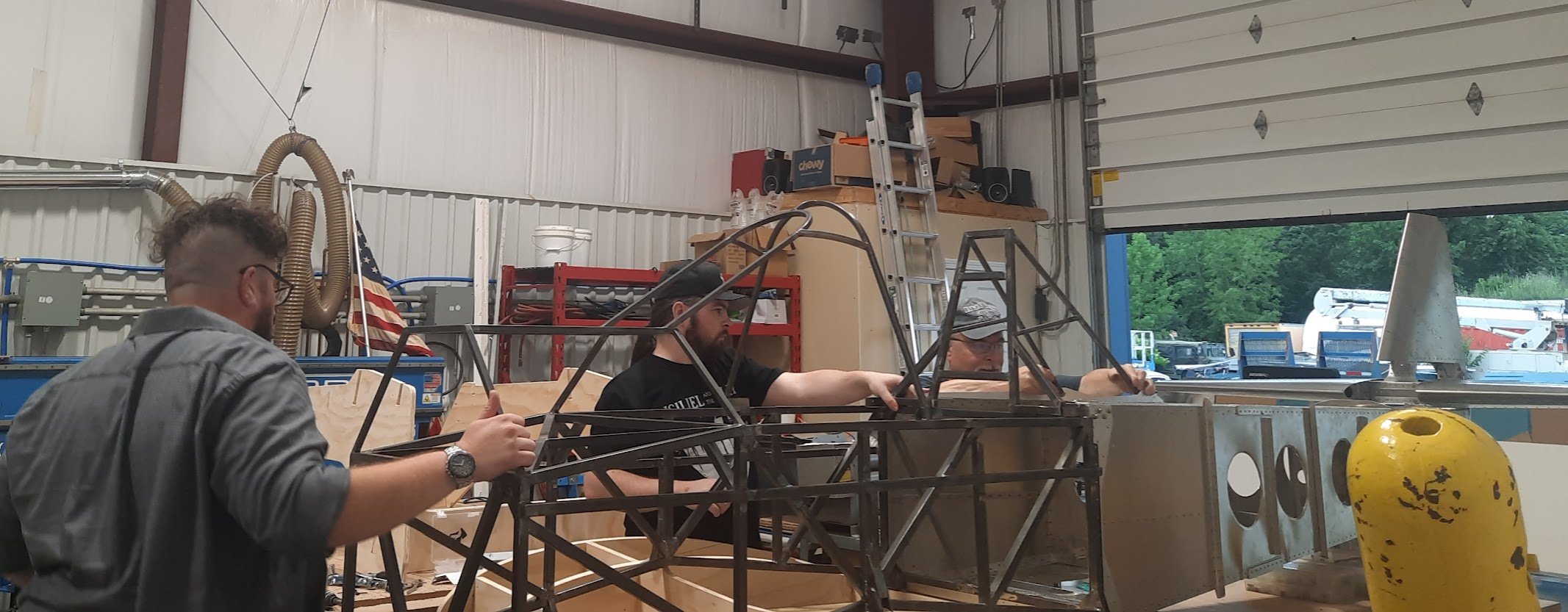
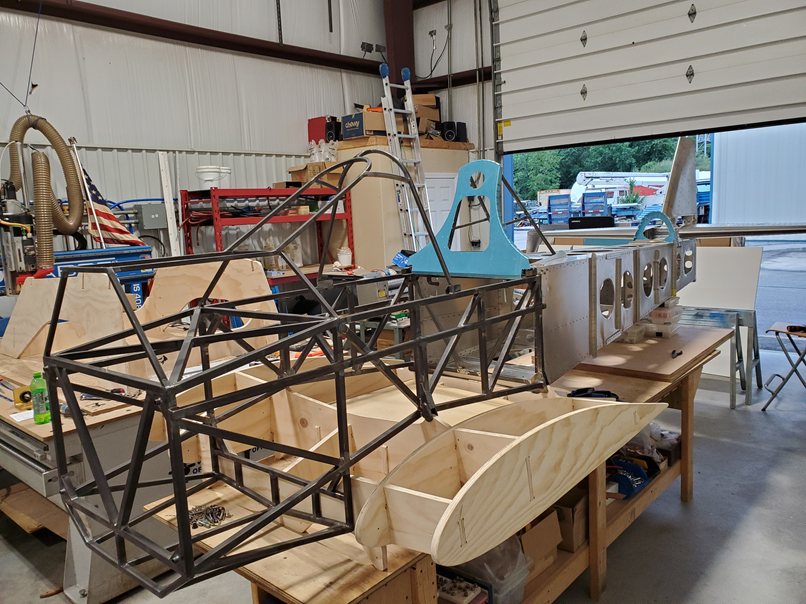
This year at AirVenture, we are unveiling our new and improved production Hawk Series. While the lines of the aircraft will remain relatively similar, we have consulted with some of the best and brightest (and most successful) in the industry to improve the internal structure, reduce weight, and simplify the build for our customers. This means out with the heavy tube and gusset aluminum frame, and in with a much lighter and stronger steel and aluminum hybrid structure. 

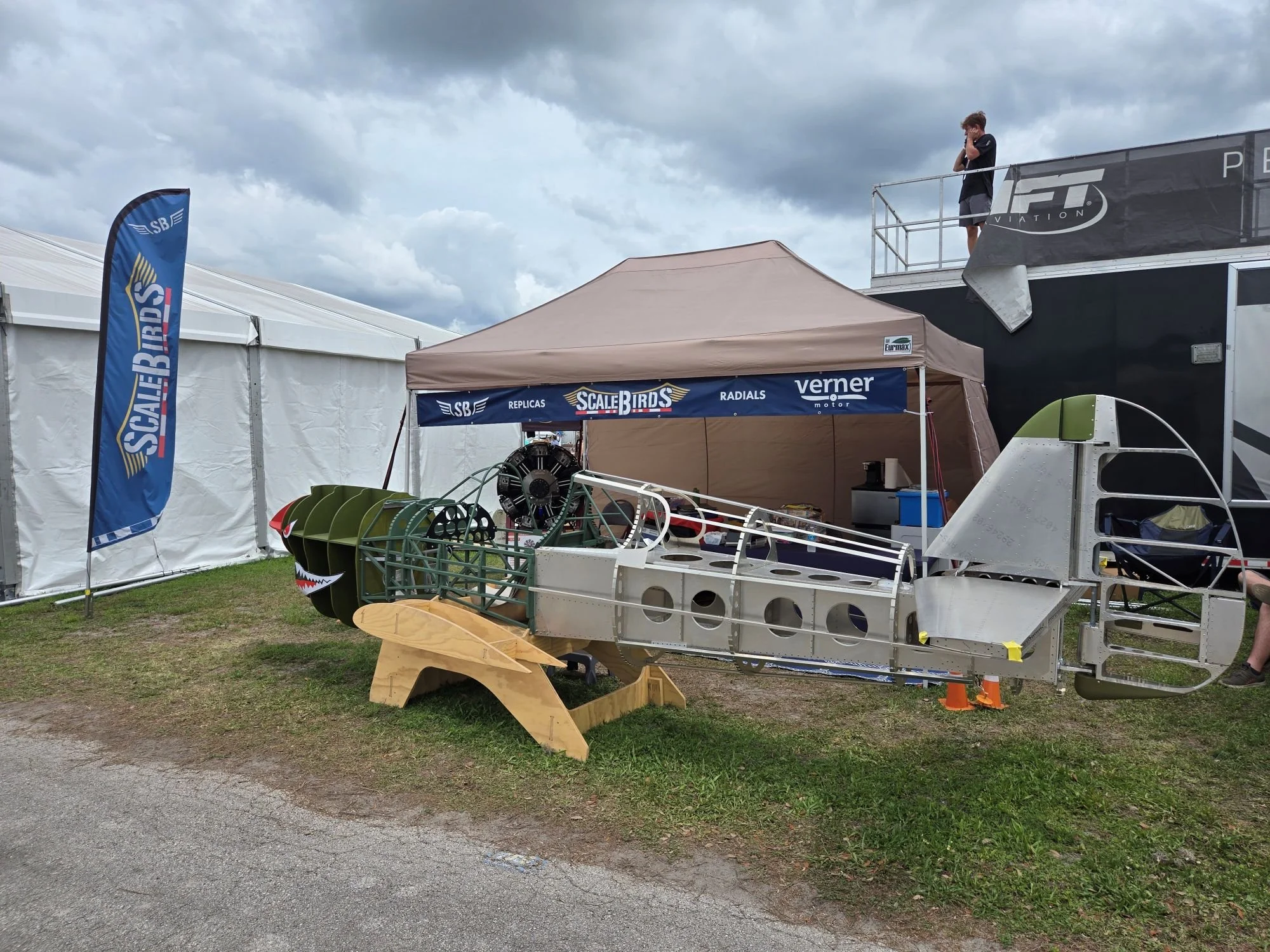
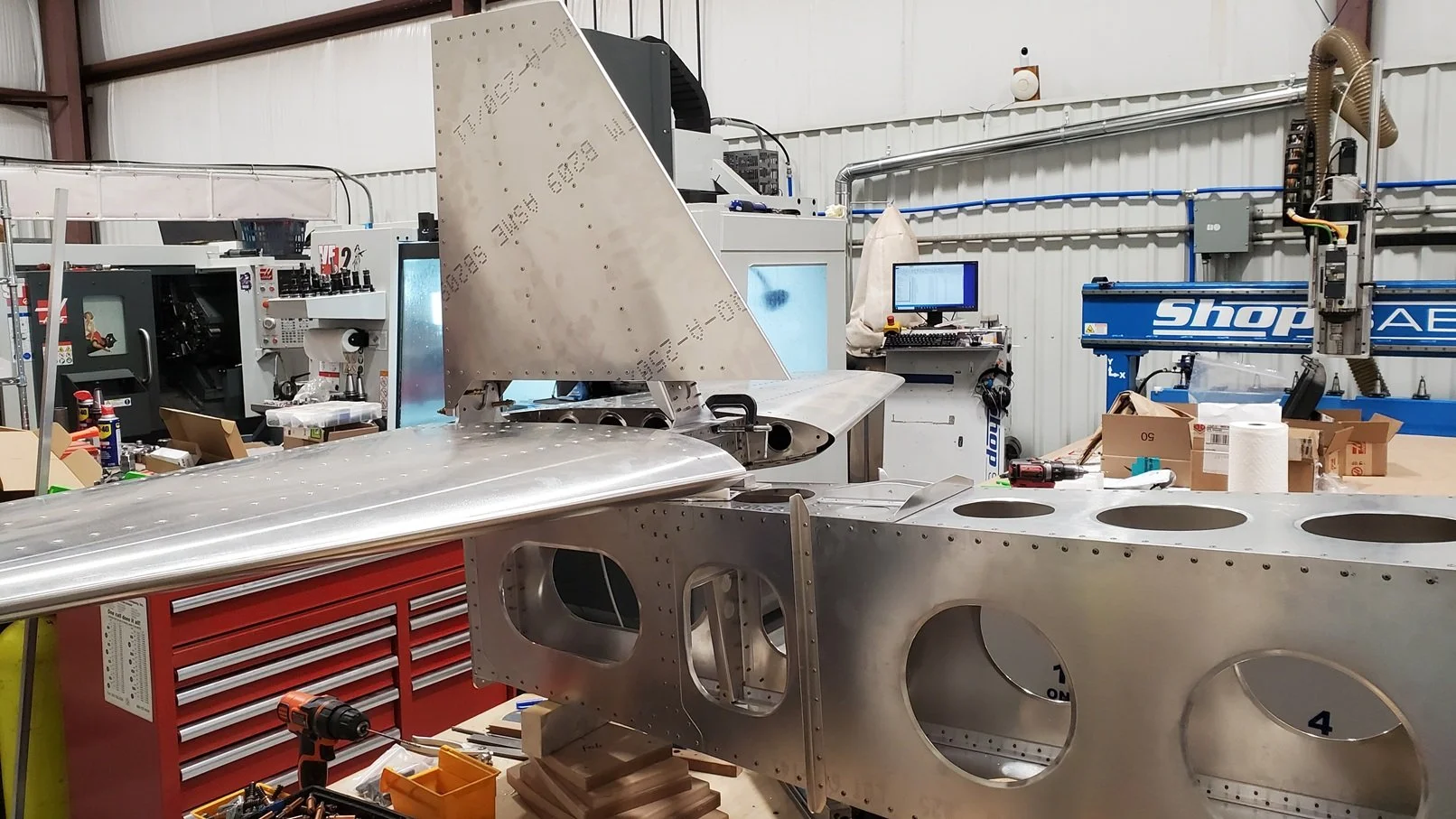
As I write this, the majority of the 1st an 2nd kits of our Hawk Series Beta kits are sitting in our booth in the Homebuilt section right now.  Major props to Scott for coming up with the wooden mockups to let us display these first two kits.  So while we will have the P-36 you have all seen and love (assuming the weather clears for Sam to leave Ohio tomorrow morning), we will also have our new sheet aluminum test article tail kit (and yes it already passed with flying colors) paired to our new welded steel forward fuselage.

I hope everyone made it to Oshkosh safe and sound.  Don’t forget to buy some merch from our PX (as most of our’s is sitting upstairs in my office here in CT). I apologize to all of my friends I won’t be able to see this year, but feel free to say high through the ‘Contact’ page, as I will be the one answering the mail :-)

Aaron tapping the fuselage into the wooden wingbox fixture while Scott and Nate remove a fixture from the tail; Scott, Sam, and Aaron discuss fit-up; Scott becomes the first person to ever sit over the new wingbox in the new cockpit structure (please ignore the fact that we are doing this on top of our very expensive new router table).

Loaded Up

On Memorial Day we had everything in place to do the load test on our aft fuselage and tail structure. Weather was also finally a go. Cameras were checked and their batteries charged. The airframe structure was attached to the blue testing fixture and setup in the parking area near our building. We used an old forklift for a counterweight. We had made stands for some rulers to take measurements of deflection. Then, after lunch, the testing crew was ready to go. We had two teenagers (extended family) help us with loading/unloading 46 lbs. gravel bags. Many hands make light work!

We preloaded the structure to 900 pounds of load - just over 4 g’s as a warm-up and to stretch what is going to stretch. This helps calibrate the deflection measurements. All new structures are going to settle and stretch under first loads. The result after unloading the structure is the baseline “Zero”. We noticed a couple areas of skin compression (slightest bulge between rivets) on the bottom box skin.

Test #1 was 1,196 pounds or 5 g’s at full gross weight at dive speed - Vne +10% (8 g’s at acro gross and maneuvering speed Va). We held that for 30 seconds or so. Measured deflection of 1.5” at the aft fuselage. In the long bay 2/3 the way back, we have two lightening holes in that panel and saw that there was a significant distortion of material between them. We had discussed adding panel stiffeners but were going for light structure. After removing the test weight, we decided to add the stiffeners to help with that distortion. There was no permanent deformation, so the structure was still good. The skins looked like they had taken a load, but still fine.

Test #2 was to 6 g’s at full gross weight, dive speed (9 g’s at acro weight and maneuvering). Deflections were about 1.75 inches at the fuselage and we held it for a good 30 seconds. The new stiffeners really helped with distortion of the panels and will be added to the kits. We then supported the fuselage and loaded more bags on for another test. Test #3 was 1,380 pounds and held as just as well. We didn’t unload but loaded more bags on for Test #4 at 1,518 pounds. Held that for almost a minute. Test #5 - At this point we unloaded three bags from one side of the horizontal stabilizer for asymmetric testing. This twisted the fuselage about 1/4 of an inch. Held for 30 seconds and then we unloaded the entire weight. That was equivalent to 6.5 g’s at full gross weight and dive speed (10.2 g’s at acro weight and maneuvering speed). Deflection was 2 inches and we had .125 inches of permanent deflection in the fuselage after all loads were removed. There is less than a .06 inches in the horizontal of permanent deflection. The horizontal stabilizer and mounting structure is rugged as hell and could take a lot more load. The side and bottom fuselage skins had definite wrinkles at a couple spots. The main longerons and bulkheads are perfect.

The deflections were more than estimated by the CAD software and that was a concern. Then, when reviewing the video, we found that the forklift was lifting and getting light on the main wheels. This caused a much larger measurement than it actually was. We should have turned the forklift around and had the counterweighted end facing our test rig instead of the forks. So we actually had about an inch of deformation over the length of the fuselage frame under max load, not the 2.0 inches indicated. We are happy with that result and it’s everything we designed the structure to do.

Adding the two panel stiffeners was already in the design space and we can also adjust the size of the lightening holes to help with distortions. Thickening the upper and lower box skins will help with compression bulges and only will add about 2 pounds. We had thinned those two skins to save the 2 pounds. We can save some weight elsewhere and make this structure more robust. The CAD engineering simulation software was good with deflection and loads, but not so good at buckling and distortion. We knew this going in and were worried about it buckling. It did not. The main longerons and mounting blocks held perfectly. The skins show some permanent distortions, but that is to be expected when loaded above yeild.

Results show the aft fuselage and tail structure to be capable of 5g at full gross (1350 pounds) up to yellow line cruise Vno (4g at Vne - but never a good idea to push it that hard!). This has a .5x safety factor before breaking structure. At acro weight (1235 pounds) she is a +6/-4 at Va maneuvering speed or low cruise.

So its capable of x g’s means the structure will deform under load, then return to original dimensions when released from the load. The max it can do this is called the design load. Above that load it may deform and not return all the way to original. This is called the yield region. Aluminum has a plastic yeild region that stretches and distorts. Then above the safety factor yield region - it may structurally fail and break. We call that point the ultimate load.

So for this plane, 6 g is the design load for aerobatic maneuvers. Above that is the safety factor yield region with an ultimate of at least 9 g’s before breaking. It can be bent, but will bring you home for repairs. Above 9g, all bets are off of bringing the plane home.

This is just what we want for the structural design. Mild, gentleman’s aerobatics (less than 4.5g) with a very good safety factor - up to 6 g’s for if you get in trouble in a maneuver. More than that and you might bend something.

If you are looking for serious acro - this is not the plane for that. This IS the plane for a lot of fun maneuvering and mock dogfights. Keep it Fun!

Tail Time

Greetings! We are hard at work getting ready for the load test. The aft fuselage is complete except for a few bolted-on parts we still need to machine. So done in a few days. Then assemble the load testing frame and bolt it all together. I will need to locate a good spot for the test in the parking area at our shop then get a load of gravel bags delivered. The test will be a ton of work - loading and unloading, measuring for permanent deflection, then loading more, etc… Work, but it should be exciting! Pics and video will be posted! I am planning to use the fork lift to make it a less back-breaking effort for the crew.

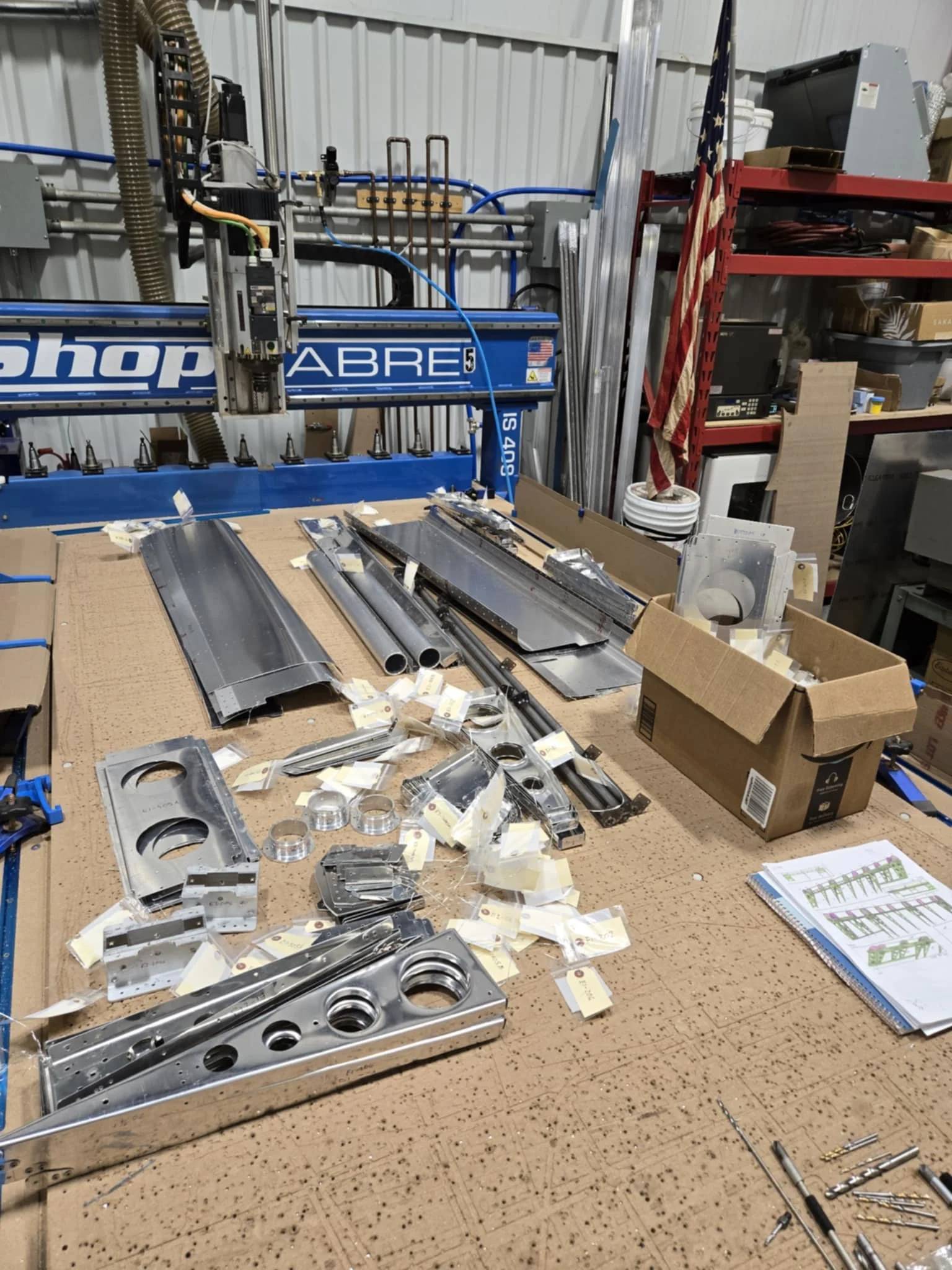
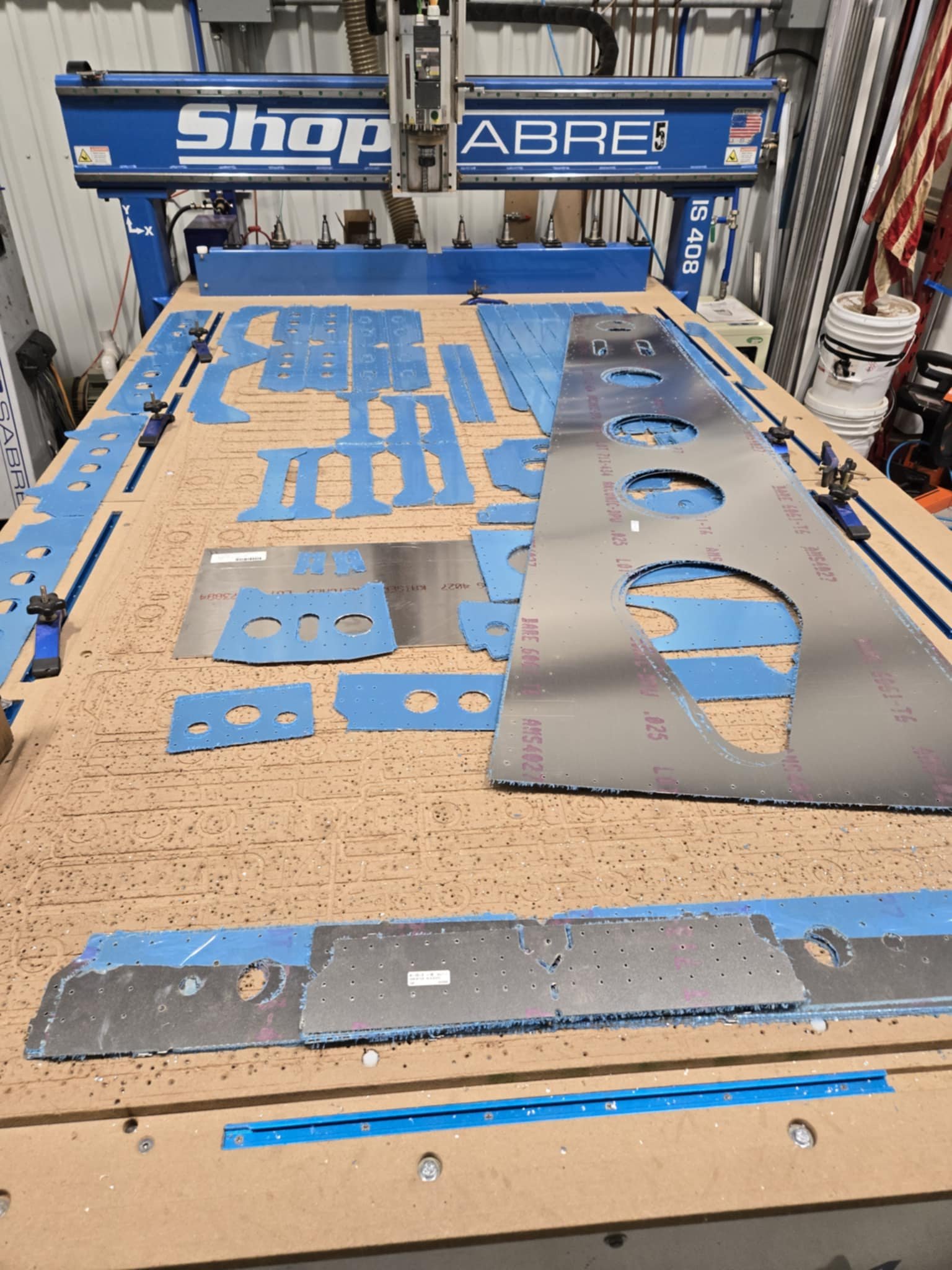
We built the aft fuselage “box” frame using Cherry stainless pull rivets CCP-42, 43, 46. It went together incredibly well. We are hoping that the end users will enjoy building this part of the airframe. We had to invent a hold down method and fixture on the cnc router table for drilling and profiling the main longeron angle extrusions. That fixture worked exceptionally well and is making kit-ready parts. It validated our decision to go with the Shop Sabre IS 408 instead of a lighter duty (more affordable) option. We are using it for milling and shaping thicker aluminum parts beyond the typical sheet. The sheet metal top, bottom and sides as well as the bulkhead parts were all cut out and pre-drilled. It just cleco’ed together. Not one hole was off location, though we did intentionally leave some holes out of a few mating parts to allow adjustment/fitment of the bulkheads. We did not need to make an alignment fixture for this. We just used a carpenters square for alignment for this first time. We should be able to dial in the exact location and make them matched holes within a few iterations. Very pleased with the results, but always wanting to improve.

Originally, we designed and built the P-36 prototype with an aluminum tubing frame with gussets, riveted and bolted together. This is very similar to the Airdrome Aeroplanes WW1 kits. It worked and was easy to build. However, it took a lot of gussets! This also made for some tricky riveting in places. This aluminum tubing frame was chosen because we thought it would go much faster than our original box design. It really didn’t go any faster and was not any lighter. So we have learned a few things along the way. We are back to the box design and are paying attention to designing it to be easy building and as light as possible. The forward fuselage frame will be welded 4130 steel tubing with welded gussets. The aft aluminum frame will bolt to the forward steel frame. The steel frame up forward is better for crash protection and structural load paths. The aero skins are just for shape and are not considered in the structural calcs - though they do add some strength.

This internal structure method is not weight optimized - taboo in aircraft design. We could save weight and some effort by going semi-monocoque for sure. However, we are on a mission to create more than a single airframe design. The internal structural method allows us to transform this P-40/36 into many models of fighters without the many iterations of structural design and engineering. It also allows us to create some truly unique aircraft models that we hope to bring forward fairly quickly. You will love it! First things first, we are hard at it to complete the P-40 design and kits to our customers.

We have a lot riding on this load test. So much so, we decided to forgo attending Sun ‘n Fun 2025. Too much of a distraction from the effort required right now. Our top priority is making progress on getting to production and delivering. Sun ‘n Fun has always been a fun show to attend - gets us out of the late winter weather up here in CT. But, it is a good week of effort before, the week during and another week after the show. That’s a minimum of a three week investment of time, effort and energy. Love SNF, but just can’t this year. I am hoping we will attend in 2026. With a P-40E and the P-36 on hand.

Actually Catching Up

Welcome back! Now its time for actually catching you up with our projects. We have been busy on three main fronts: the LiteFighter tail structure and load test, the B-17 tail structure and then the facilities upgrades needed to do all of it.

The P-40 tail is done, but we are working on the aft fuselage box frame that will be tested together with the horizontal and vertical stabilizers at the same time. We already have the fixture from previous testing of the prototype fuselage. The aft fuselage box will go together very rapidly and we will be testing shortly. Will post videos and pics. The FEA computations show we are fine, it will be interesting to see how close the software comes to reality. The B-17 tail spars, ribs and skins are being fabricated and then will go into our new universal vertical build fixture at our build studio. The facility upgrades included several wiring and lighting tasks, adding a ceiling fan to the shop, additional receptacle boxes and conduits along the shop walls for future work cells. We then designed, fabricated and installed our universal build fixture.

The P-40 tail components went together well. Had some minor fitment issues with our vertical. As a load test, we were fine with that and also didn’t spend a lot of time to make it beautiful and impressive - we are just going to bend it under loads. Fixing the dimensions was an easy fix in cad. Speaking of cad (Computer Aided Design), we modeled the LiteFighters in AutoDesk Inventor. Its an old version we have a valid license and know the program. The B-17 project is being designed in AutoDesk Fusion (Fusion 360). Its similar to Inventor and SolidWorks and we are transitioning very quickly. The FEA simulation environment is very easy to learn and powerful. We transferred a 3D model of the P-40 fuselage structure into Fusion to run the simulation. Passed with “flying colors”. We could even lighten it up some more, but we want to make sure we are not losing rigidity. One thing you notice when flying our plane is it feels Solid. I really like that. We will likely transition the entire LiteFighter design into Fusion at some point. Each CAD software package has its strengths and quirks. Fusion seems solid and is working for us. Other kit aircraft companies are using Fusion now. Its also very economical to purchase seats compared to SolidWorks and Inventor. A primary goal with the Beta airframes is to optimize (lighten) the structure to improve performance. So far so good!

We work the P-40 effort as we always have, nights and weekends. Our day job is the bomber project until we start bringing income in for the LiteFighter Beta and then standard kits. That should be quite soon, once the testing confirms our structure. We will then add to the crew as needed to get it all done. Realizing the pressure, we added Nathan Watrous to the full time crew for the bomber. He has been volunteering all-along when possible. Working out great, like us, he is wearing many hats! Design, fabrication, assembly and facility construction, etc…

The B-17 bomber project is just getting rolling with a lot of facility improvements required to handle such a large project. The design of primary structure is pretty well along - to where we can fabricate the entire back half of the aircraft. We are starting with the horizontal stabilizers and the vertical stabilizer right after. Then the elevators and the rudder. We will hang those up on our shop wall - that will get them out of the way and man, that will look impressive! Our preliminary weight and balance calculations and 3D modeling is showing we are a little heavy with the cg in the zone - not unexpected. We have been rounding up typically for all components for conservative guesses. We are optimizing structure as we go and will be working to reduce weight as much as possible. Aaron is crunching numbers - even on vacation!

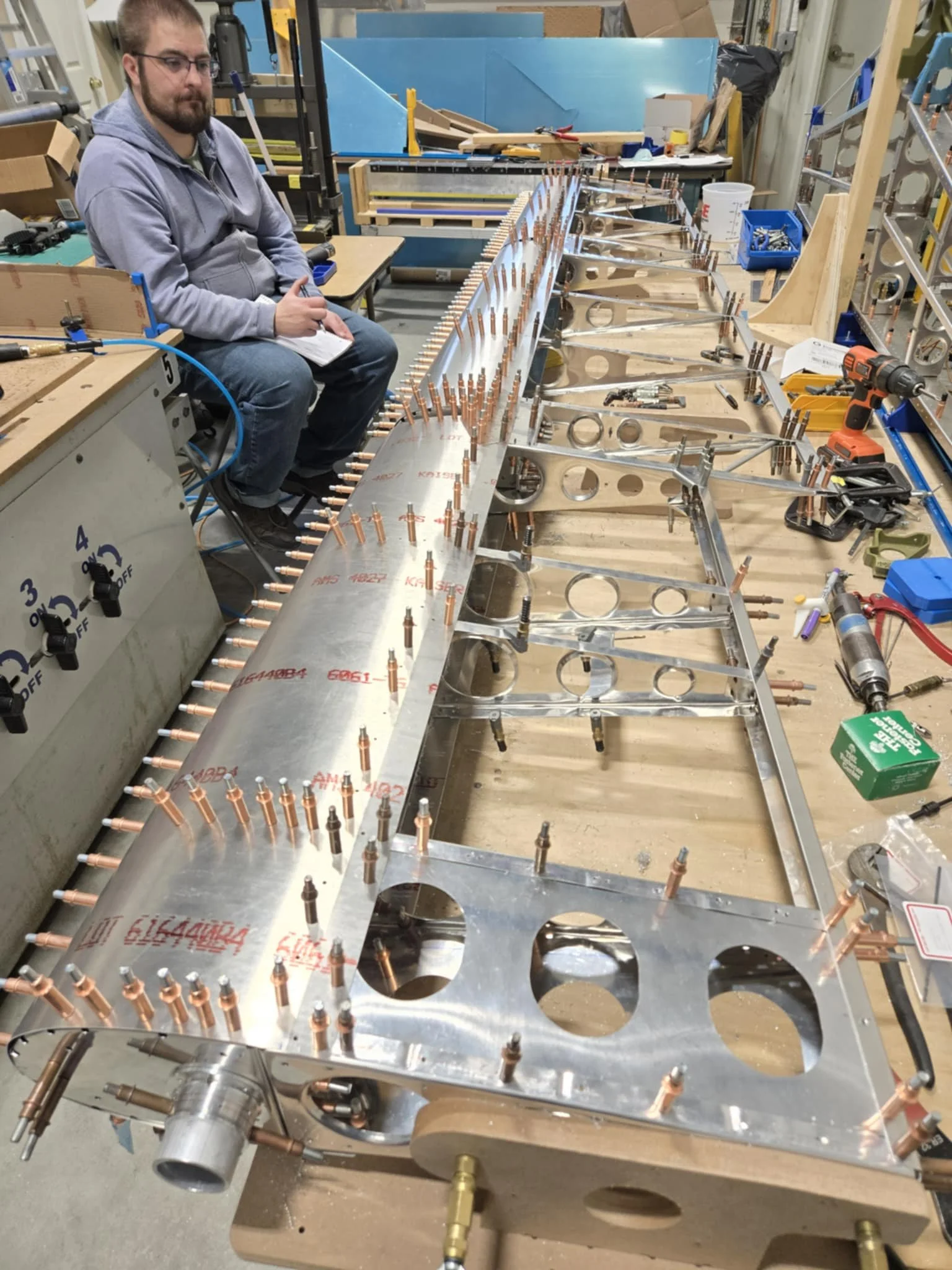
The 60% B-17 airframe is pretty damn big! Wingspan is 62 feet, length is 38 ft. Fuselage is 50 inches in diameter with a dog house on top. The span of each horizontal stab is 11.6 ft. How to build such a large airplane? Our plan is to build it in short sections of 20 ft or less. We will ultimately need a large space to assemble all the pieces into the whole. That is down the road a bit. For now, we will use our build studio (my garage) and our new universal build fixture. We studied Steve Wolf’s P-47 wing build fixture and picked his brain. He is such a tremendous wealth of knowledge for fabrication! He built both wings at the same time and it saves time doing that. Our fixture is based on his, but made for adjustability to make the other parts of the plane. This fixture can adapt to different sized aero structures and allows two wings or horizontals to be built at the same time. Additionally, it can also hold different jobs at the same time or support a fuselage section build. Its made with Unistrut channels at top and bottom that allow the 8020 vertical t-slot columns to adjust horizontally to support structures properly. Then brackets reach out from the 8020 columns to grab the structures as needed. All of this can be adjusted vertically and horizontally. So we can build Bomber components now, and LiteFighter or other wings and parts later.

UPDATE: Good news: we have cut first parts and forming blocks on the B-17 build. They are big! The horizontal stab is as big as our LiteFighter main wing!

Bad news: Windows update killed our access to our network access storage (NAS) devices. Those older devices (Drobo) are no longer supported. We couldn’t just revert to the previous update because it would require remapping and that would risk loosing all access to the old devices. Soo, we had to buy a new NAS device with cloud backup. We had an old Windows pc running our old CNC router that can still see the Drobo units. So we could transfer the data by using an external solid state drive and haven’t lost anything. But it was dangerous! So, if you have important data, keep it on current devices. I’ve been unable to get to some of our data for over a week. This delayed me posting this blog update. We have old backups of the design data that we could access, but would loose some recent design effort on the LiteFighter and some non-design files we need. fortunately, the Fusion cad files are all stored in the cloud and were available.

Will post more pics and updates as we get going. Thanks for folllowing!

Catching Up

I was thinking about writing a new blog post today to catch you all up. I just happened to check my phone for aviation news and it showed Paul Dye’s article posted at Kitplanes and blew me away. He sure seemed to like our plane when he was here to test fly it, but I really didn’t know what he would write. Would he hate the control harmony or something? I appreciate the kind words about us and the aircraft. And NO, I did not pay him to write a word of it. Although I might owe him another “Slice of Heaven” from Mystic Pizza (Julia Roberts Movie) next time he is in our neck of the woods. We have always asked for constructive feedback - we want to make this aircraft the most fun flying experience any sport pilot would want. So we super appreciate him flying and writing about our design. Please check out the article: https://www.kitplanes.com/scalebirds-p-36-hawk/ The flight test report article is on the Kitplanes.com home page.

Since that is quite a bit of reading, I will update you all in a few days with pics of what we are working on and status.

Copyright © 2024 ScaleBirds LLC  |  All Rights Reserved