Winter Update
Hello and greetings! It has been pretty hard winter here in Connecticut. Colder for much longer and a good amount of snow this year. We have dealt with it and are still trucking along. It did make changes to some of our operations. Multiple snow days and alternate work weeks and some days and nights of just staying home and doing CAD design work. Most years we get 3 or 4 dustings to 4 inch snow falls, maybe using the blower once. Been seriously exercising the snow blower this year. I’m mentally done with this stuff. Starting to like the idea of maybe becoming a Snow Bird someday! A lot has transpired in our corner of the AeroVerse since the November 18th blog post. Here goes:
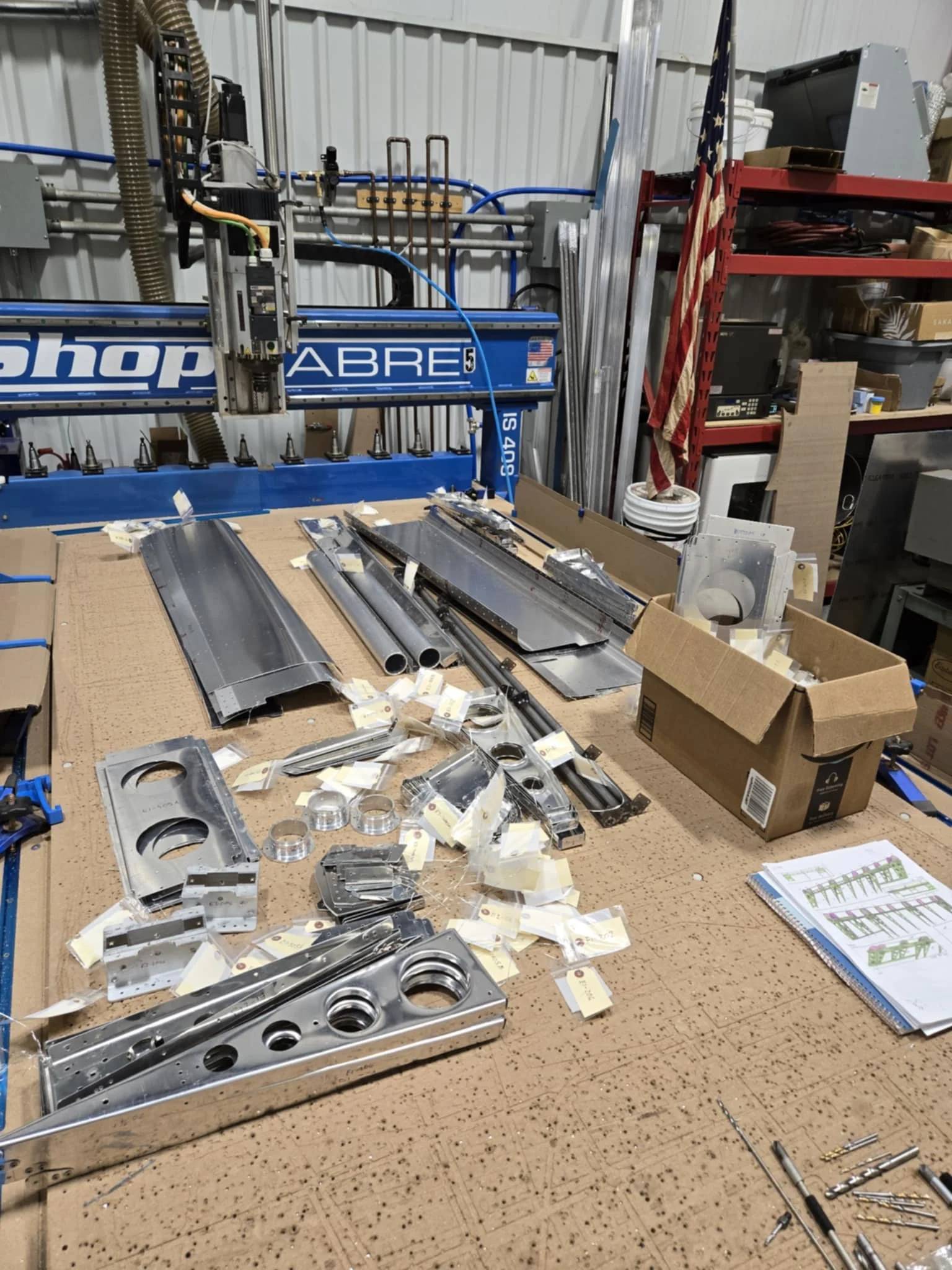
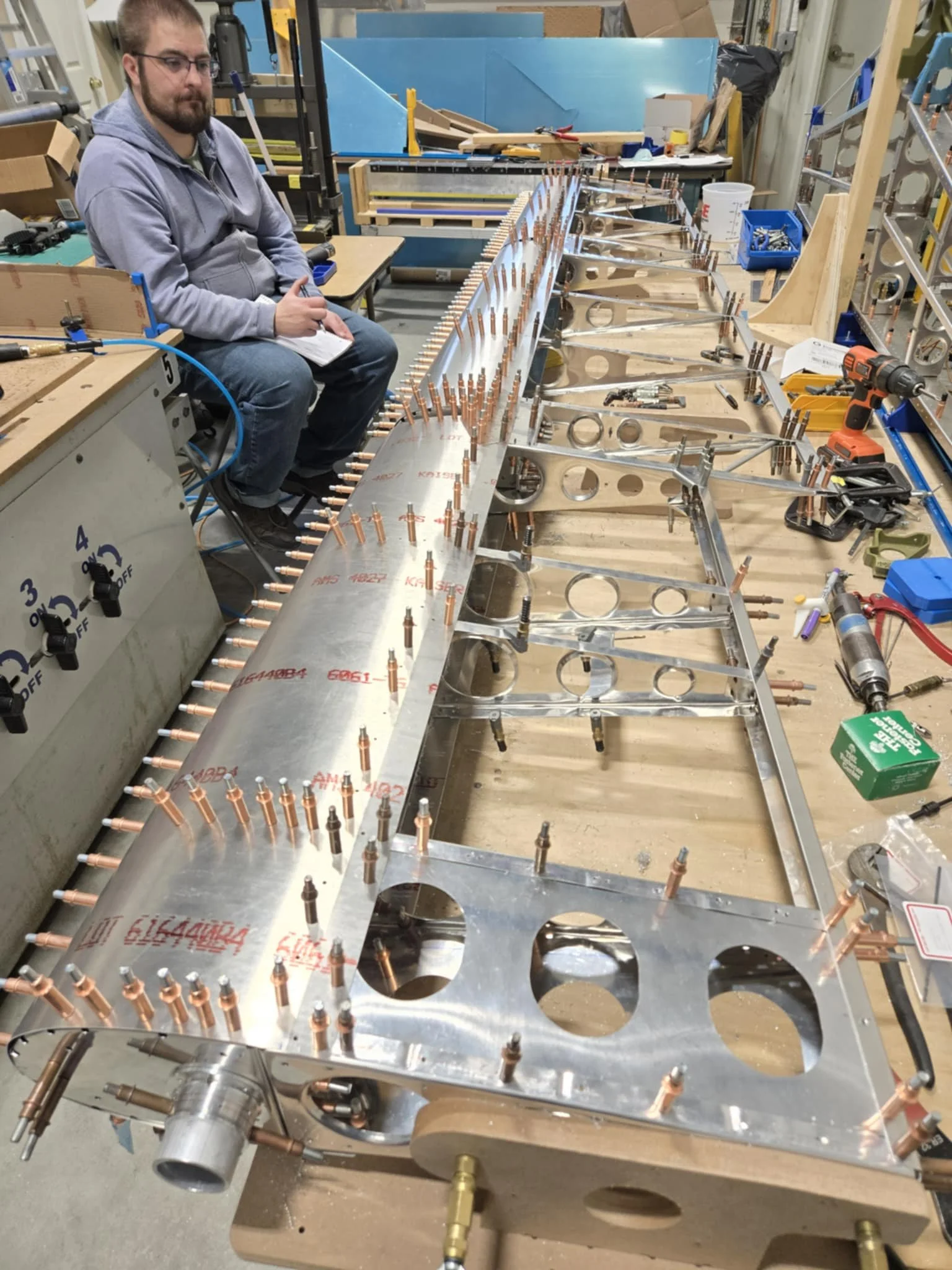
We have been pushing on the Bomber project tail feathers and are still at it. The elevators have been fabricated and pre-assembled, drilled, diss-assembled and out for primer. We will be able to rivet and get final assembly of the elevators fairly quickly when the parts come back from the painter. The cold temps are interfering with the painting schedule, but signs point to soon. The horizontal stabilizers are going into the build fixture this week. The 3D model design is almost ready for the vertical stabilizer and we should be making those parts shortly. The rudder will go pretty quickly and is similar to the elevators - but harder due to the curving leading edge and trailing edge towards the top.
Not sure why Boeing did the B-17 the hard way. Most airframe manufacturers make straight or mostly straight taper airframe parts with spars staying at the same cord percentage all the way out so they are straight. If you look at the B-17 carefully, it does have straight tapers to the wing and horizontal skins. But the spars do not follow the taper, they meet the skins at different percentage of cord all along the length of the spars. This change in percentage makes the spar caps and stringers have a curve/bow shape. It makes it much more complicated to fabricate if you care about panel lines, rivet lines, etc… We are trying to make an exact scale replica externally.
We are also working on getting started on the aft fuselage at the same time we work the vertical and rudder. The aft fuselage is pretty much a straight conical taper - except in the transition area near the ball turret and the fwd fuselage aft of the radio room. The fabrication and assembly seem to be straight forward and easier than flying surfaces. We may also get some experienced volunteers to help with fabrication. We are trying to push and pick up more momentum on this huge and amazing project. Meanwhile, our partner for the engine installation design, Radial Conversions from FL is helping us with modifications and testing of the engine with mechanical fuel injection and a new electric adjustable, featherable custom propeller.
The LiteFighter Beta kits are making progress. The overall design update program is close to finalized, our part numbering, assembly documentation and inventory processeses have been largely worked out, and so we will be able to push the forward fuselage and wing kits in more rapid succession.
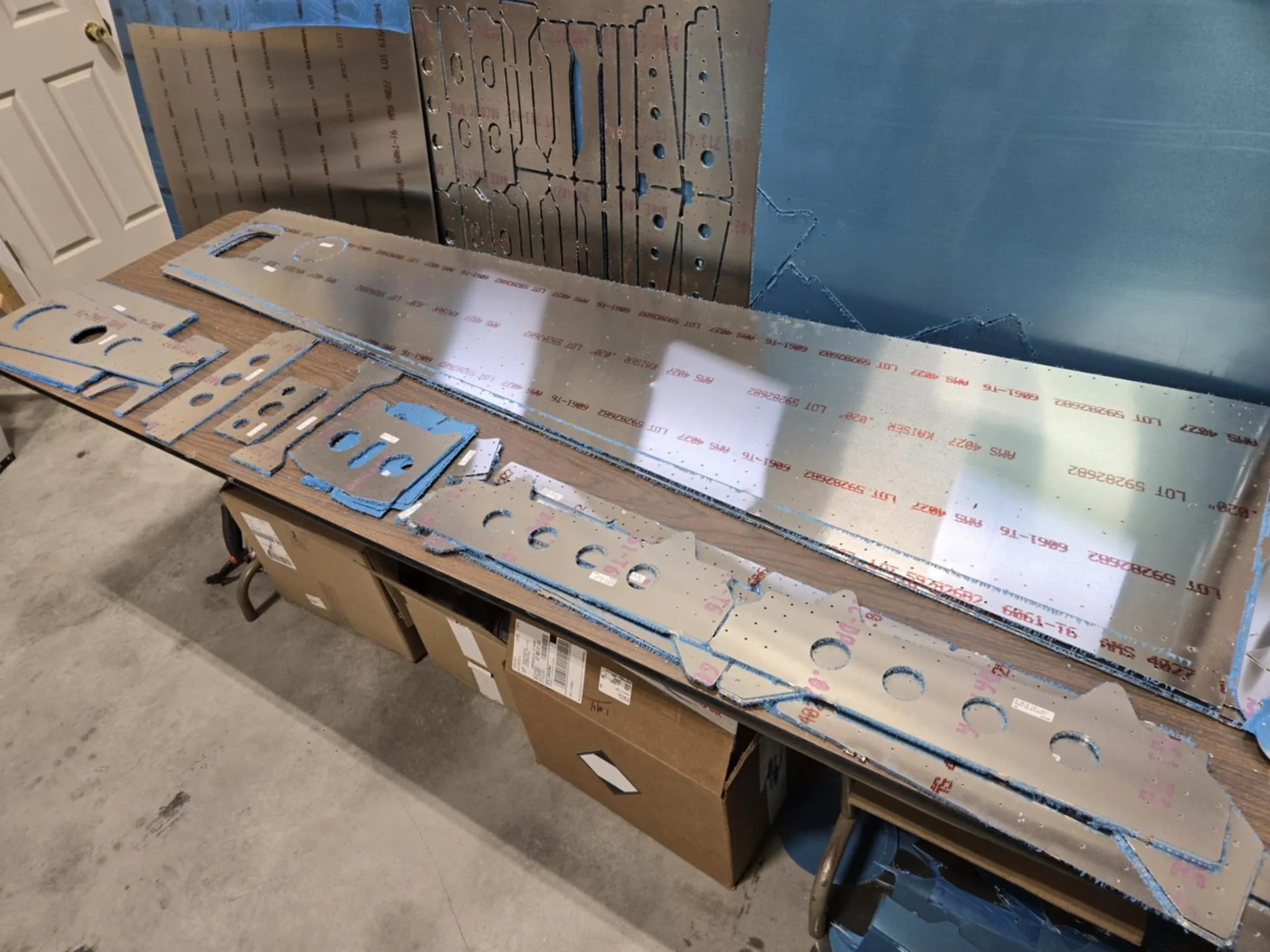
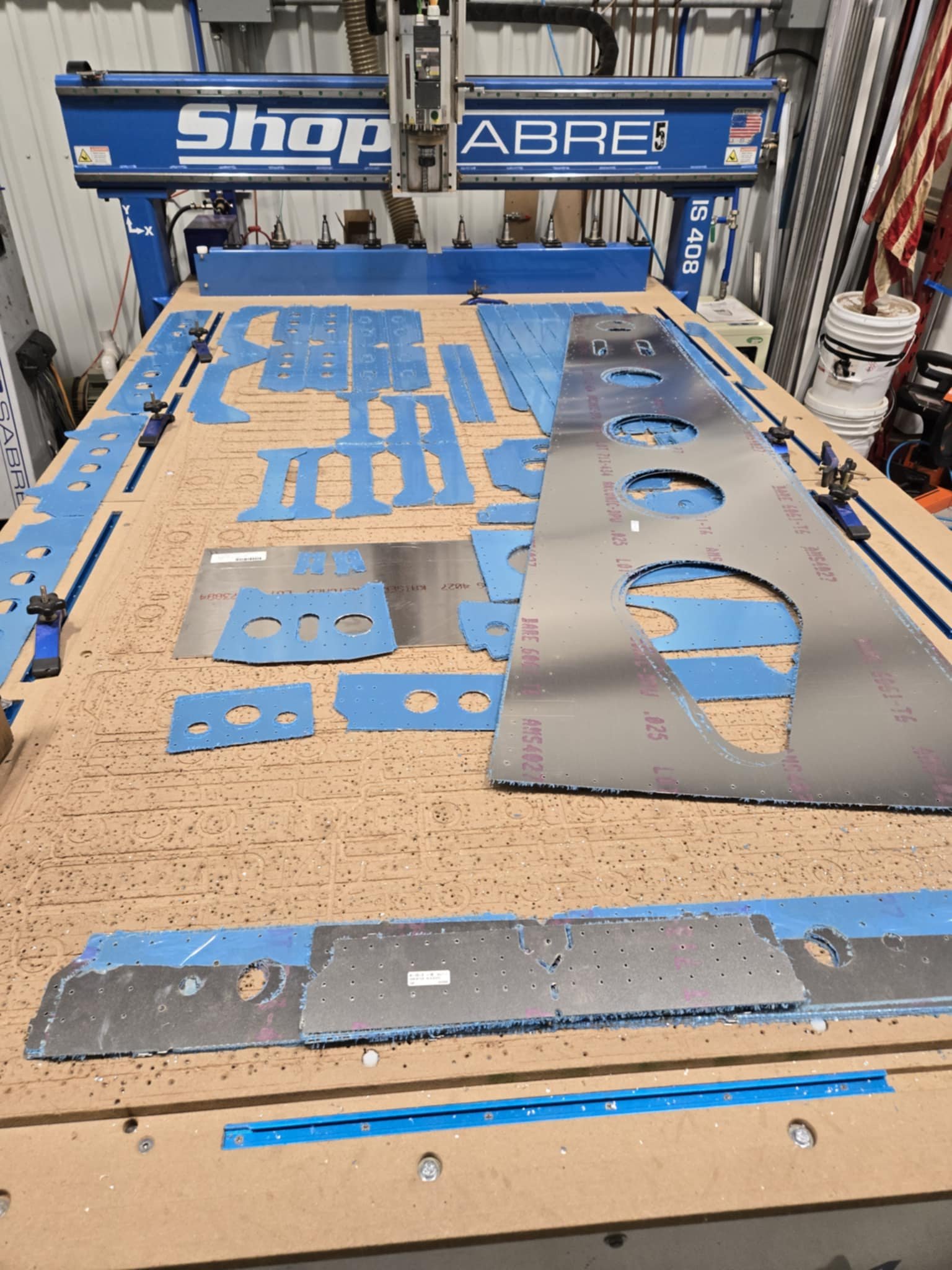
The tail kits are being wrapped up as we work on bending the remaining flanges for the aft fuselage, and Scott has a few final larger billet parts to machine. We are aiming to get these beta tail and aft fuselage kits out well before Sun n Fun so we can spread the good news and have time to focus on our trip south.
Our plan for Sun n Fun 2026 is to bring the P-40 mockup, same we had at Oshkosh, with a bit added to allow a more interactive experience, though you may need to bring your own airplane noises as it will still be a static display. We previously only had a structural shell to show the assembly process but we’ll be adding some of the components that make it feel more like a workable cockpit. For Verner, we will also be working on an engine and propeller display stand. The bomber project’s first Verner engine is packed for Florida as I type this and will be shown. We may also bring some bonus B-17 parts to display. Our booth will not be big enough for displaying the P-36, so I will not fly it down to Florida. We will be in booth N-096 out in front of Building A, middle way down an aisle. Will be there - hopefully with all this stuff ready to show. We are used to doing some all-nighters before a show. Airshow mode!
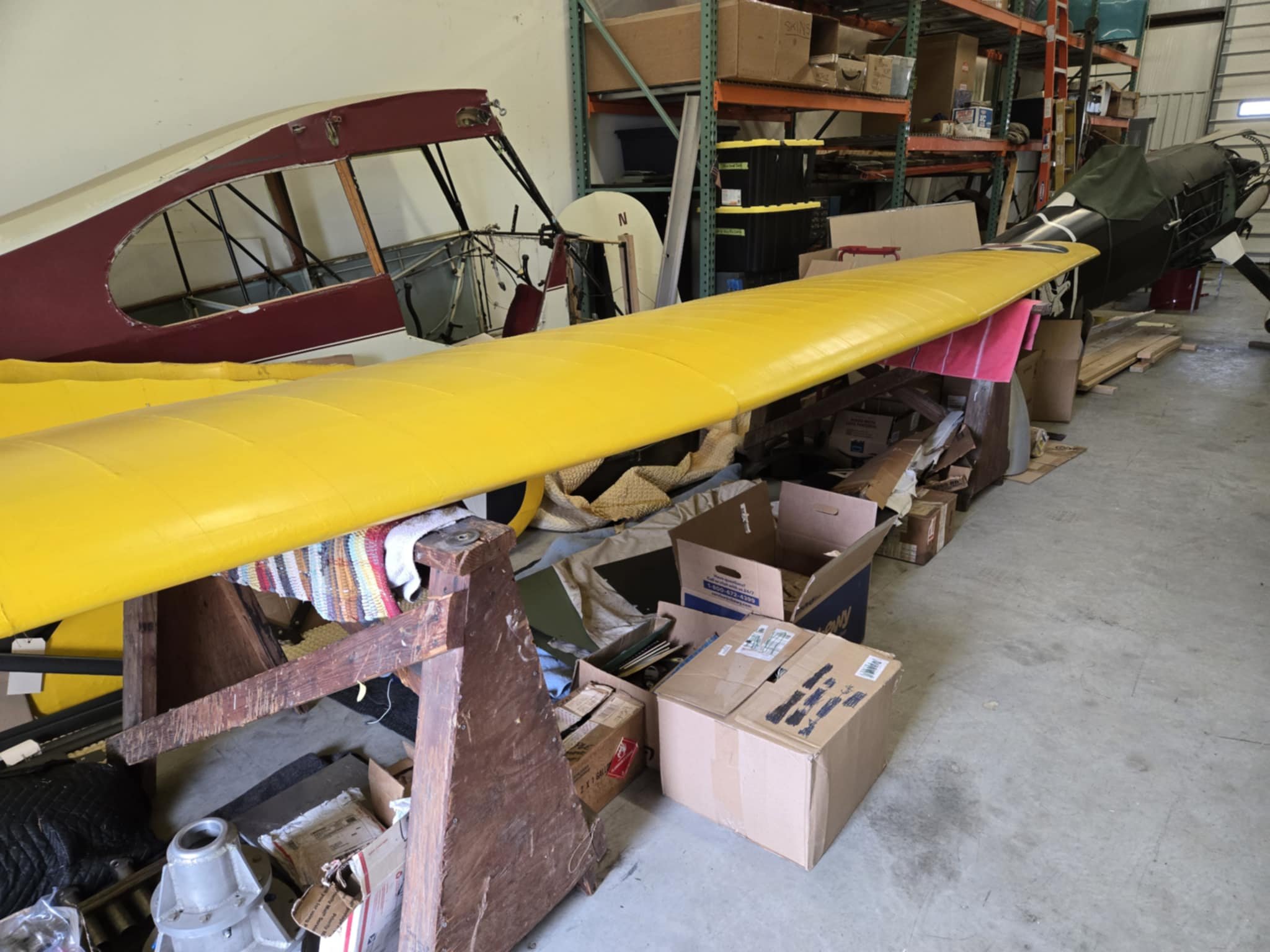
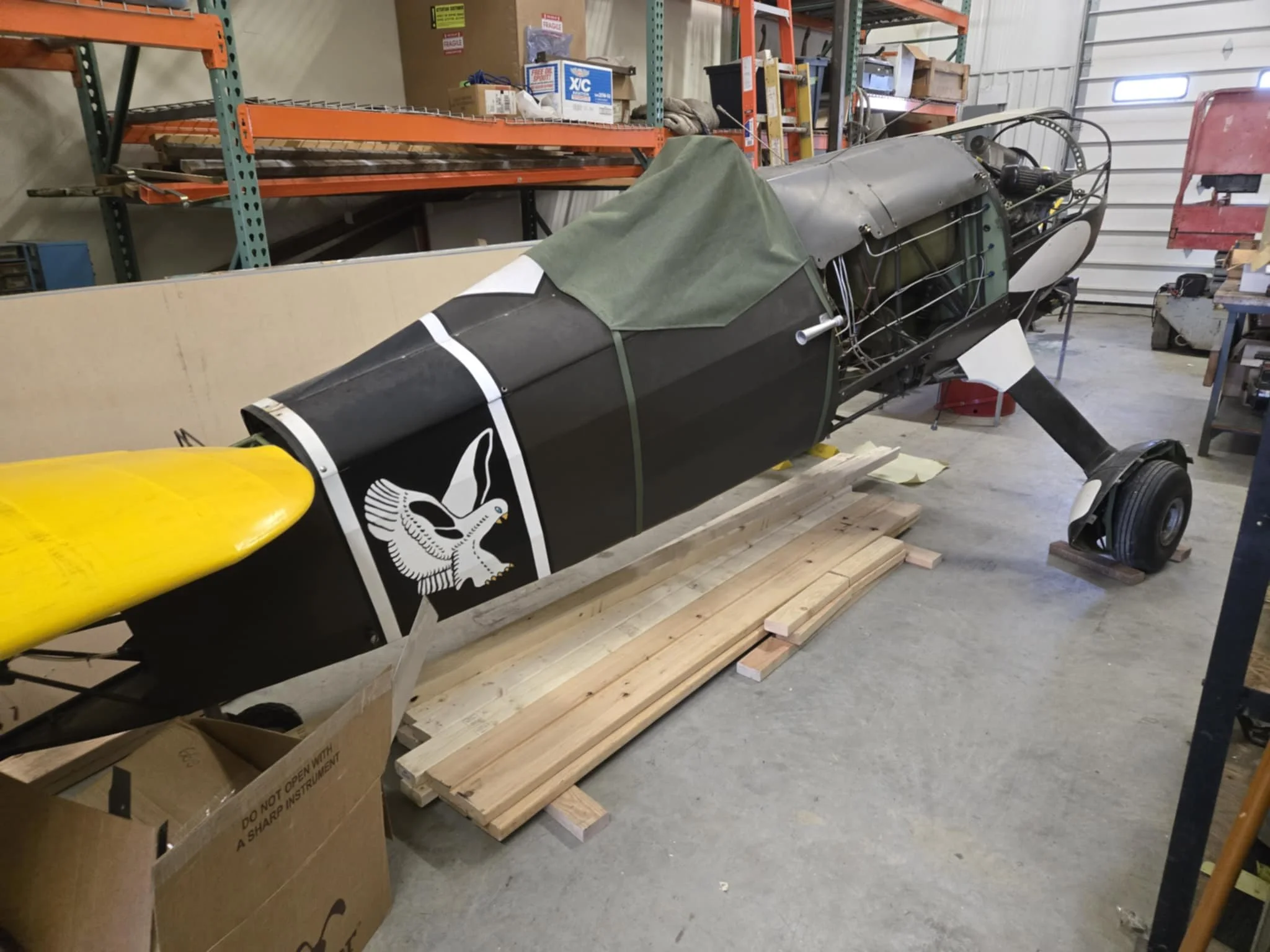
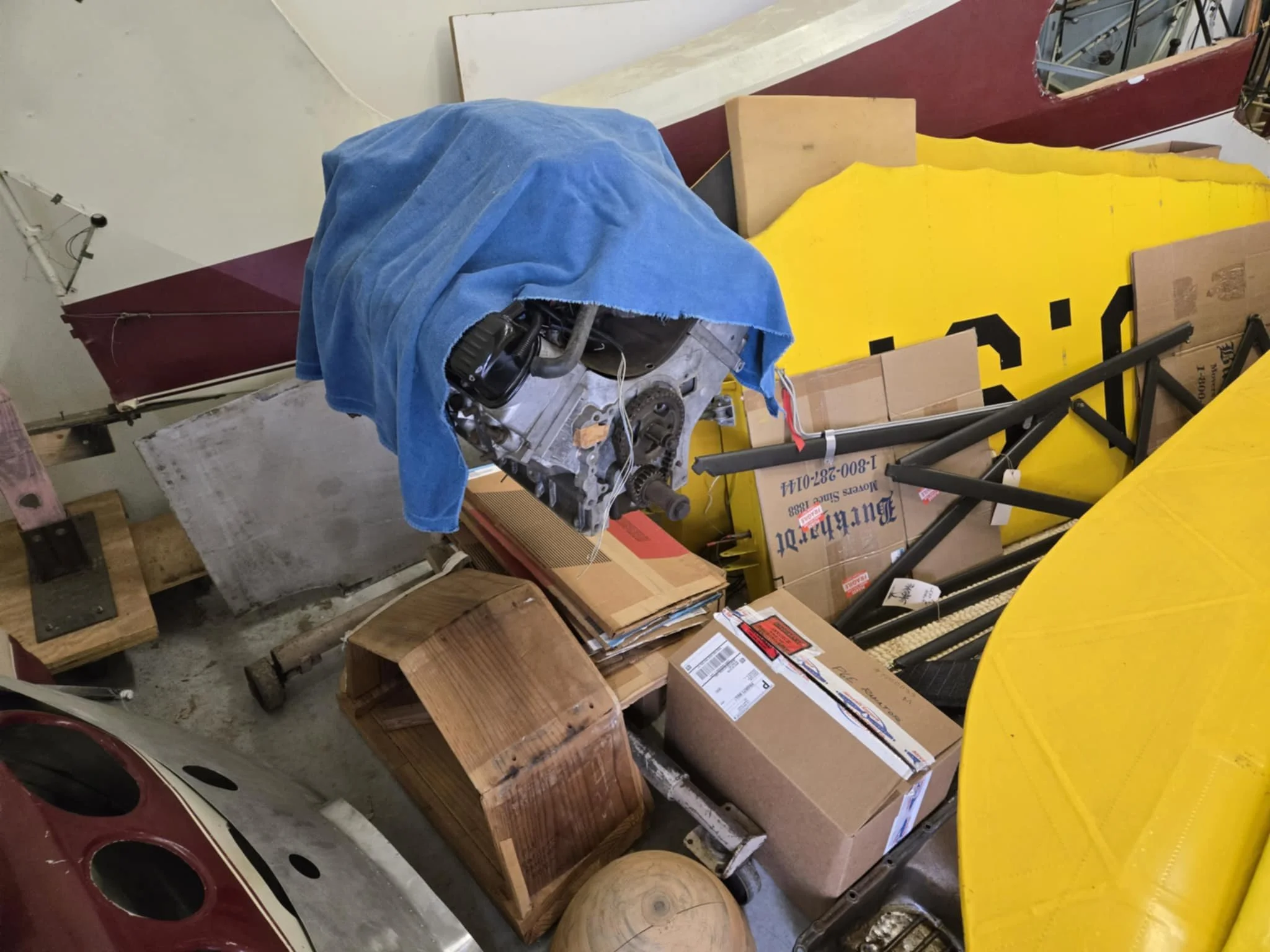
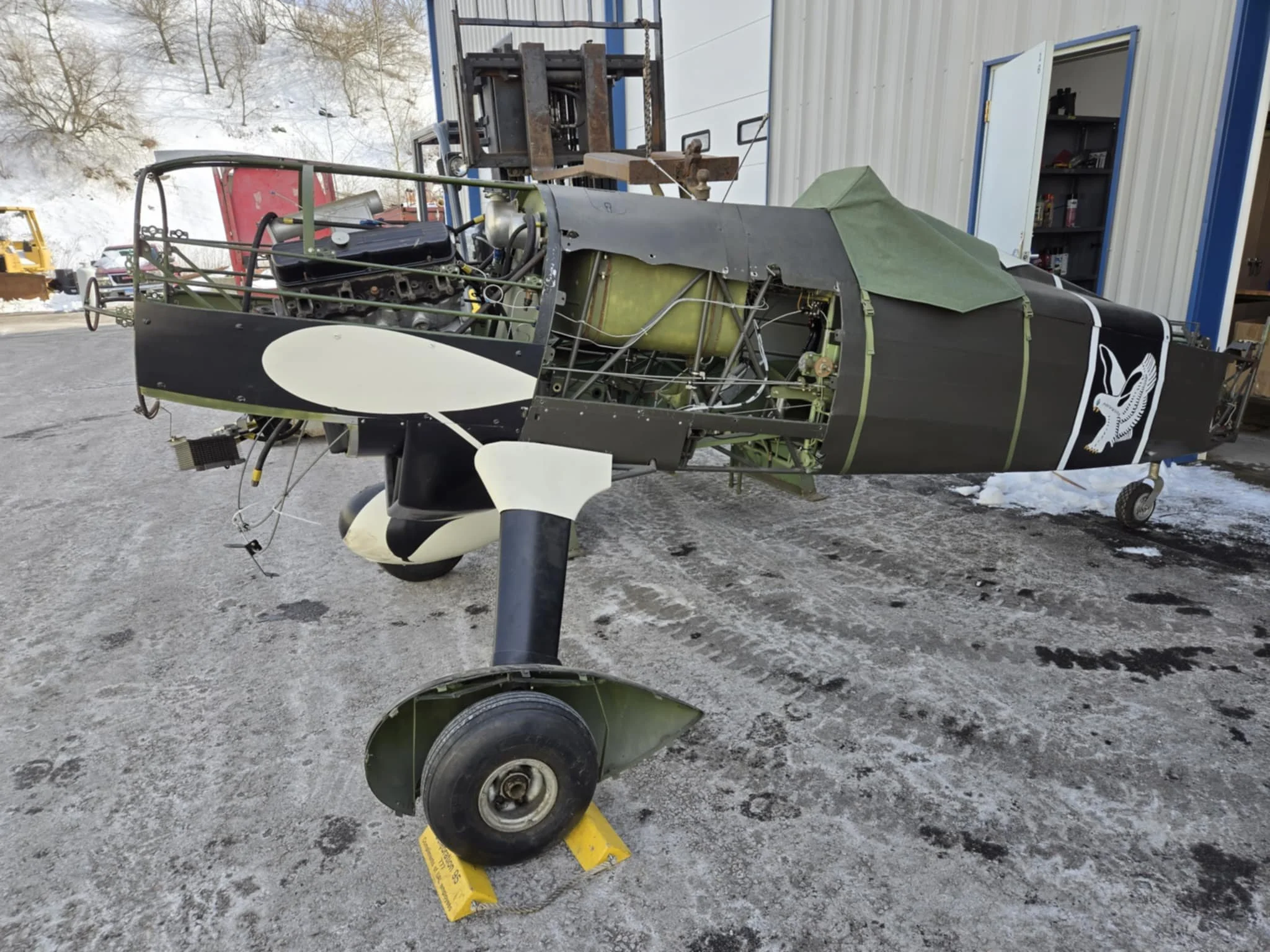
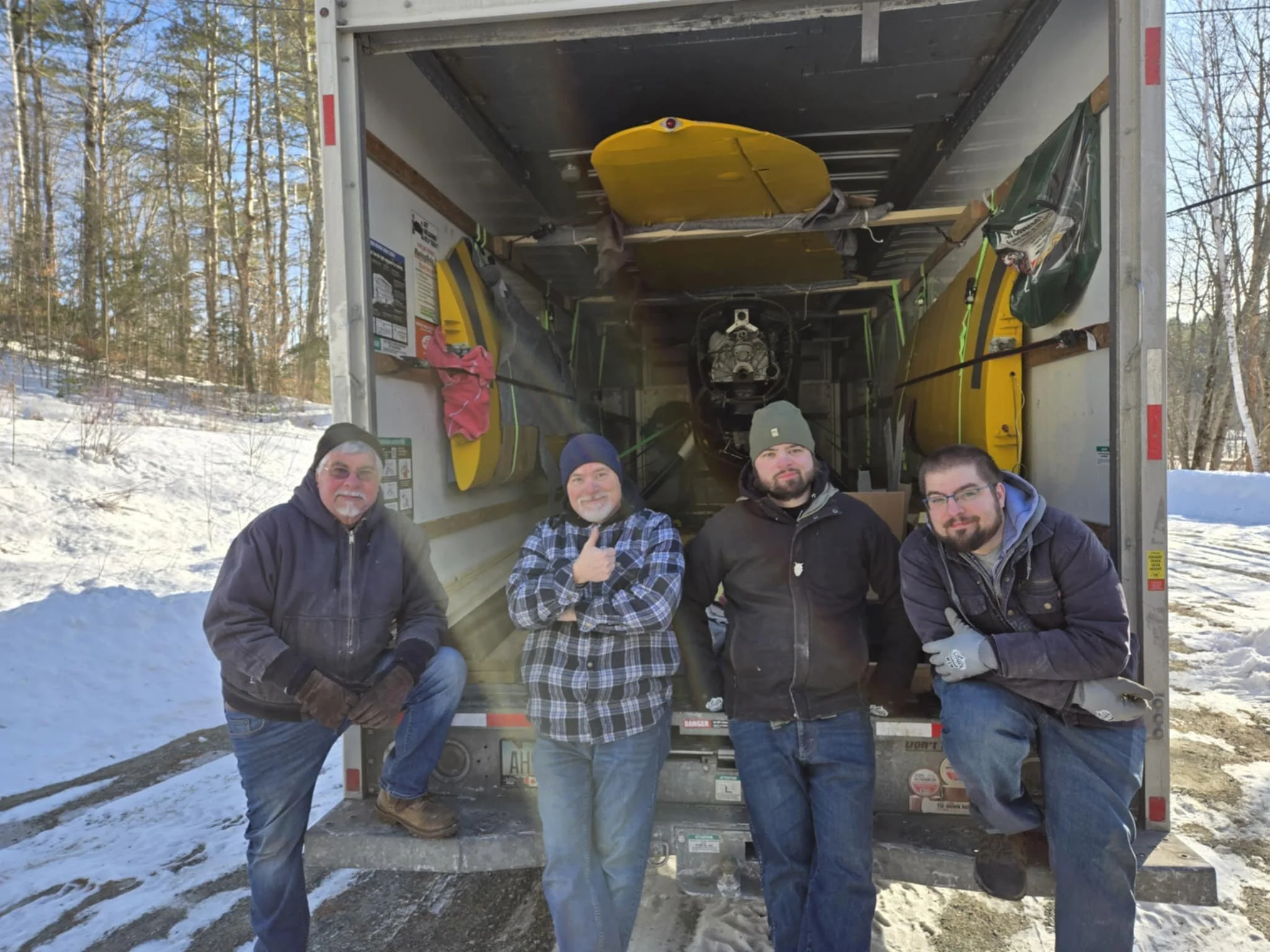
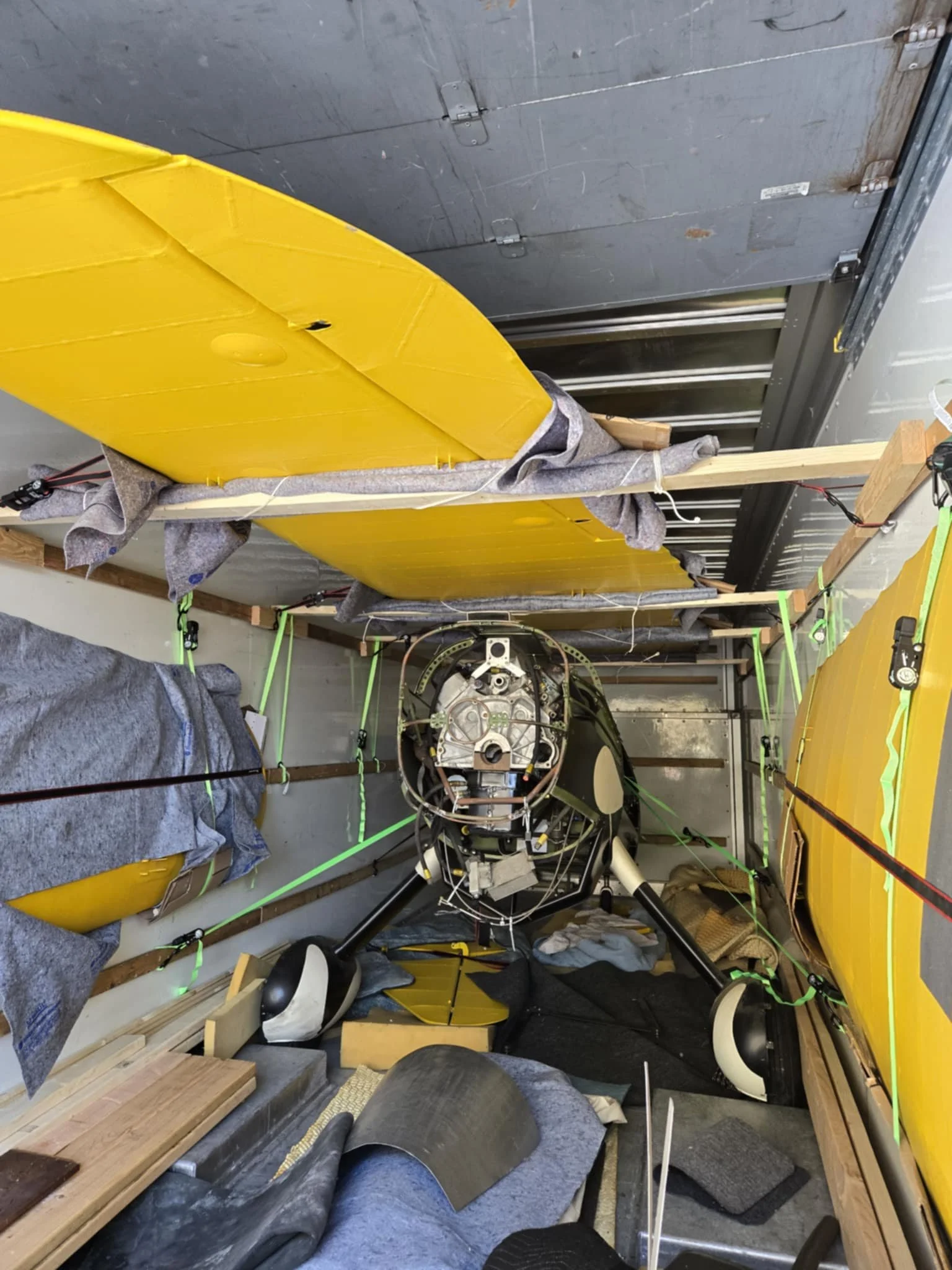
Now for something completely different: we were contacted in late January by a guy we met at the RFA’s Friday night BBQ. We were sitting across from him and his brother, drinking Spotted Cow beers. This gentleman had purchased and was storing a replica 75% Curtiss P-6E Hawk biplane fighter. After our meeting at AirVenture 2025, we had intended to find the time to visit the project, but never did. Well, Andy Gelston called and made us a deal we could not refuse. We will owe him a couple small Verner engines over the next 5 years or so. But, we had to retrieve it from New Hampshire before February 14th or it was going to be discarded. So we agreed and did just that - between snow storms and on a 25 degree day (balmy for NH), we spent four hours driving up to near Grantham, NH, then another 4 hours loading it into a 26ft Uhaul truck and then driving 4 hours back to Groton, CT. Unloaded it the next day at our shop. No damage or trailer rash! The only issue was the fitment engine wasn’t bolted into the mounts and it had moved aft and nose down. See pics. We were fortunate that the bed mount frame caught the engine block and held it - not bending anything. Lucky as the roads were terribly rough - full of pot holes and frost heaves.
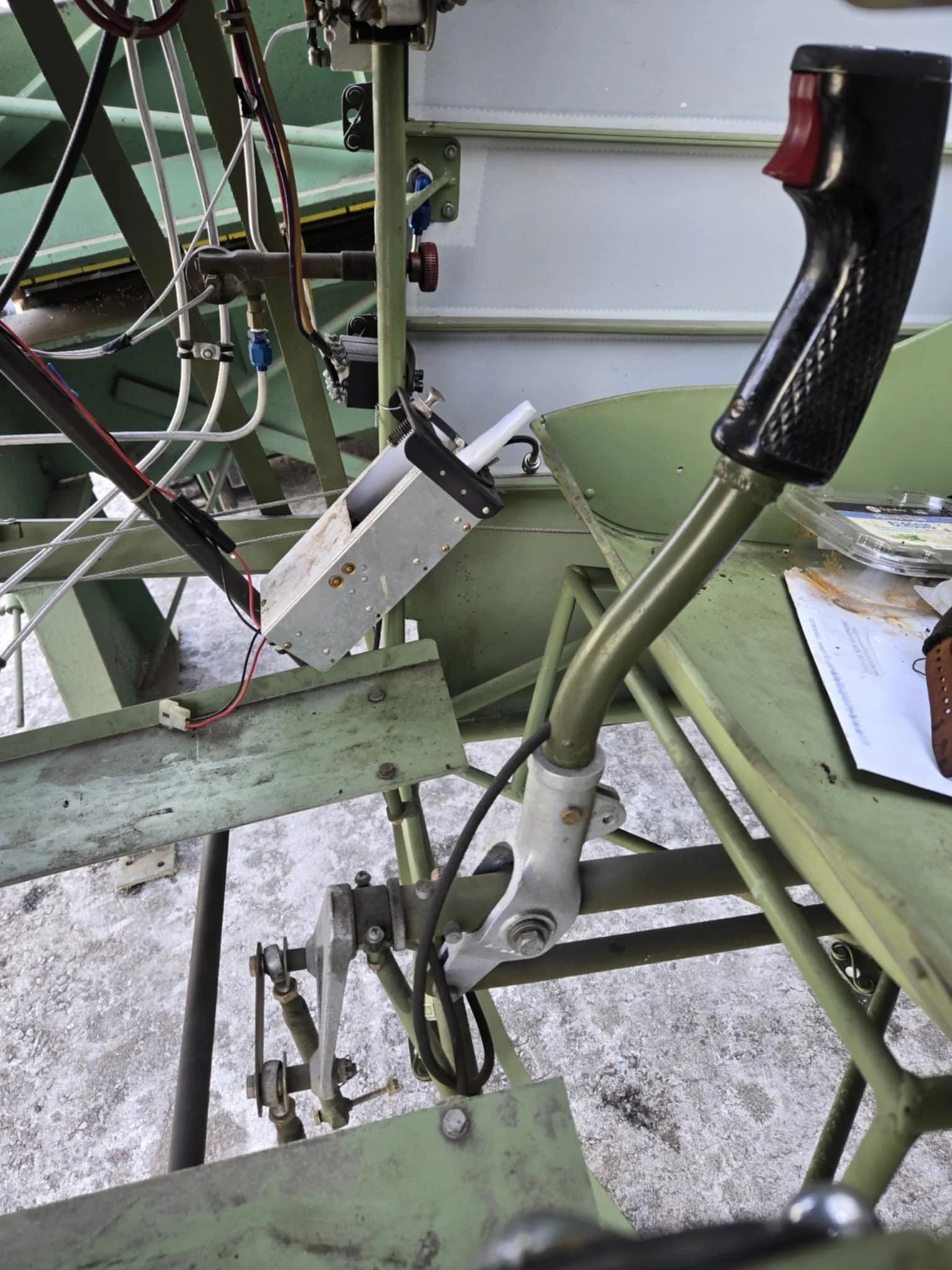
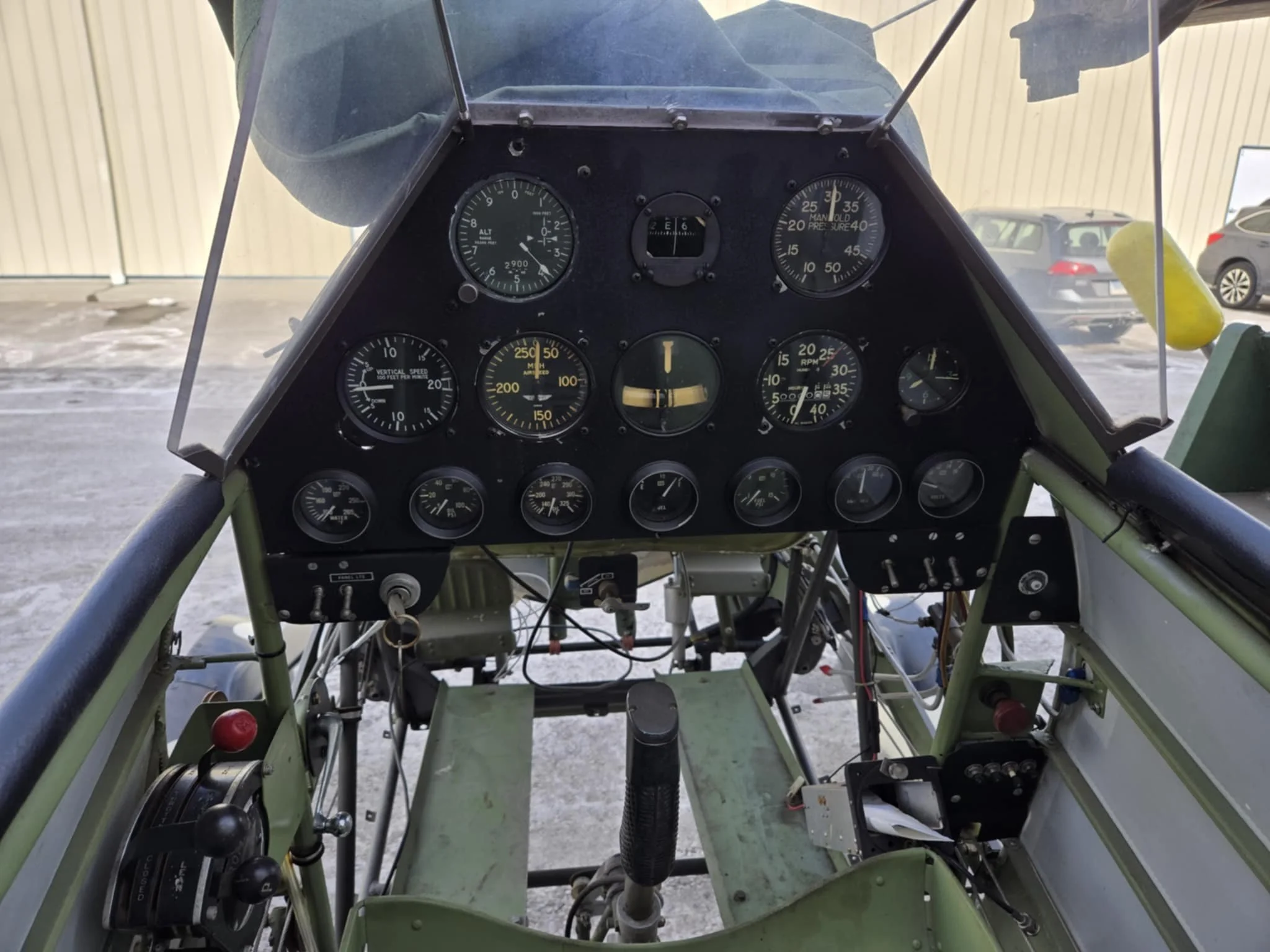
Understand, we need another aircraft project like a hole in the head. We have no room as it is. However, this one is of interest to us and is literally 98% complete and painted already. Instruments and all the systems are installed. N-struts, cabanes, flying wires had all been made and rigged. Cowling, wheel pants and fairings all made. Some are wrapped and out of sight in the pics. The only thing left is the engine and redrive, propeller and custom radiator installation. The redrive shaft and gears being what brought the build to a stand still previously. The custom radiator has to be soldered by a specialty shop - because it is an old school custom shaped aircraft cooler that no one does anymore. The one shop that can do it does them for real fighters at real fighter pricing. We are thinking of changing that to using two smaller racing radiators with a grille hiding them. Although the project has three Buick V8 engines, one being the flight article, we may change the whole engine setup to a Viking 195 or an AeroMomentum AM20. We do have the capability to make the prop shaft and modify the planetary gears for the existing unfinished redrive if we decide to go that way. But we might use this airframe as a kit prototype and we would have the same engine and propeller combination the kit should use - one that is readily available.
Let me be clear - the P-6E Hawk is in long-term storage and we will concentrate on the bomber and our P36/40 and F6F LiteFighters. Then, after we are cruising with the kit business, we will likely get the P-6E flying and back engineer the structure (we do have mostly complete drawings and patterns) into a quick-build kit - possibly in a partnership with another airframe manufacturer. This airplane is really cool up close and will be an eye catching and fun machine. We always thought that if we were to venture into a biplane fighter, the P-6E was the best candidate. It was the last Army biplane fighter and you can see the similarities with the follow-on P-36 Hawk.
As a one-off, scratch-build project, this one was started in 1975 by Joe Locasto in San Mateo, CA and then in its current condition, moved to New Hampshire in the 2000’s for about a 40 year design/build. Structure is designed around a StarDuster 2 biplane that is two seater and aerobatic. This aircraft is a little smaller and lighter so it has very rugged structure. If we could make it a quick to build kit, i think it would be marketable. An interesting thing about the P-6E Hawk is that the exact same airframe from the firewall aft is the Navy F11C-2 Goshawk fighter. It had a radial engine with a speed ring cowling and a higher turtledeck. So, it can be done as an Army in-line engine or Navy with a radial. Very much like we do with the P-40 and P-36 variants.
ScaleBirds will do our best to keep you updated and make more videos - including one of the P-40 mockup up close. As soon as the weather gives us a break. Talk soon.